


Medical experiments at KL Natzweiler
CONTENTS
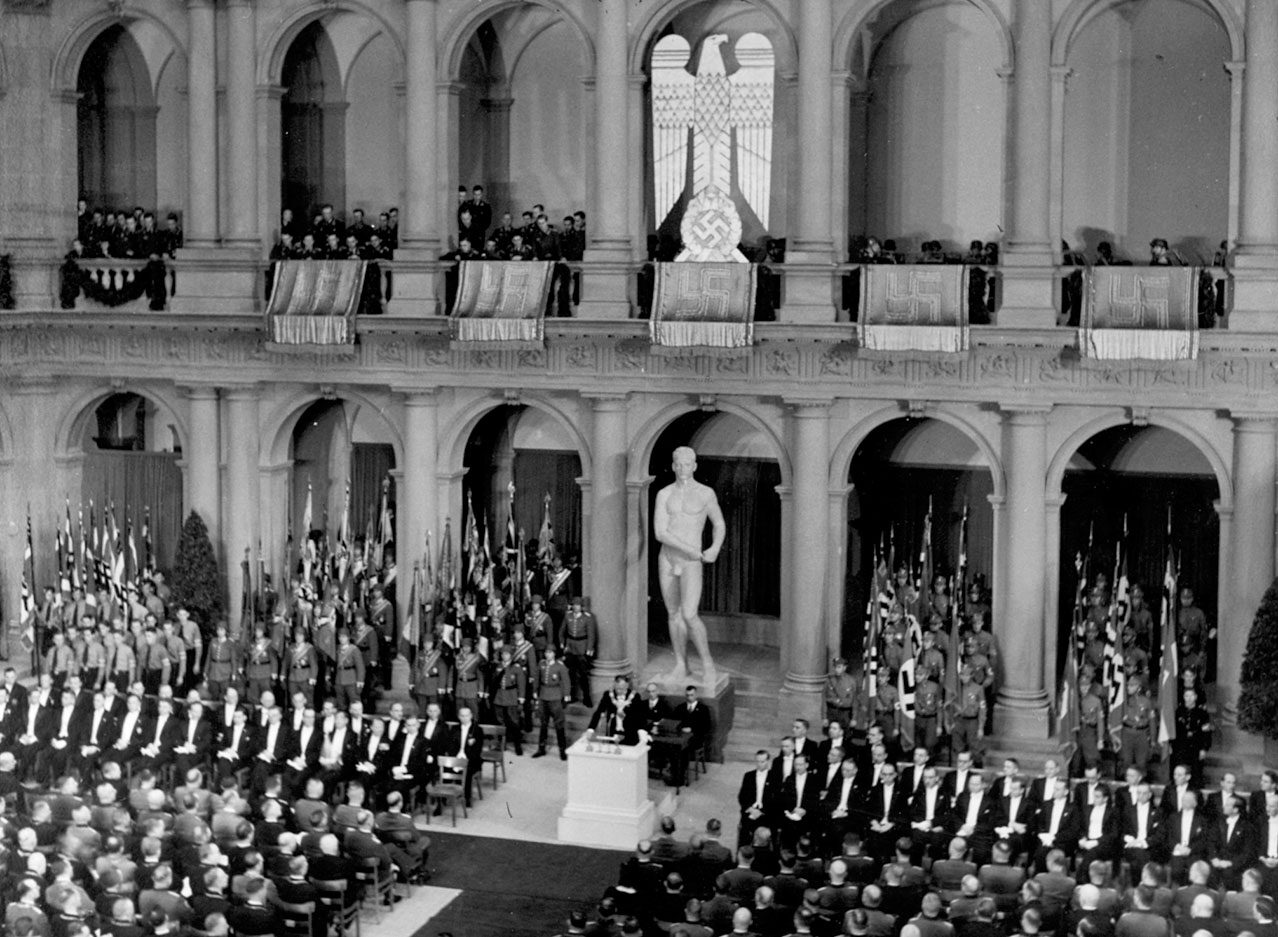
On the 23rd of November 1941, the Reichsuniversität Strassburg, the University of the Reich in Strasbourg, was inaugurated as a showcase for German science. Three doctors from this Nazi institution seized the opportunity offered by the KL Natzweiler concentration camp to conduct their research on human beings.
In July 1942, the first step was the creation of Section H (for Hirt) at the institute for applied research in the war effort, which was part of the institute for racial hygiene (Ahnenerbe) tasked with proving Nazi racial superiority.
At the request of three doctors — Otto Bickenbach, August Hirt and Eugen Haagen — an experimental station was set up in August 1942 at KL Natzweiler. These internationally renowned professors conducted research on typhus, phosgene gas and mustard gas, all in support of the Reich’s war effort, with the exception of August Hirt’s anatomical collection.
The gas chamber
The building housing the community hall of the Struthof Inn was confiscated in November 1940. It initially served as a place of accommodation for the first deportees arriving in 1941.
Construction work began in autumn 1942. The gas chamber, measuring 9.25 m2 and with a capacity of 22.2 m3, was completed on the 12th of April 1943.
This gas chamber differed from other similar structures in terms of its purpose: it was used for biomedical research, rather than for mass extermination as part of the Final Solution, the Nazi leaders’ plan to annihilate the Jewish people.
3 doctors serving the Reich
Otto Bickenbach (1901–1971) and phosgene gas
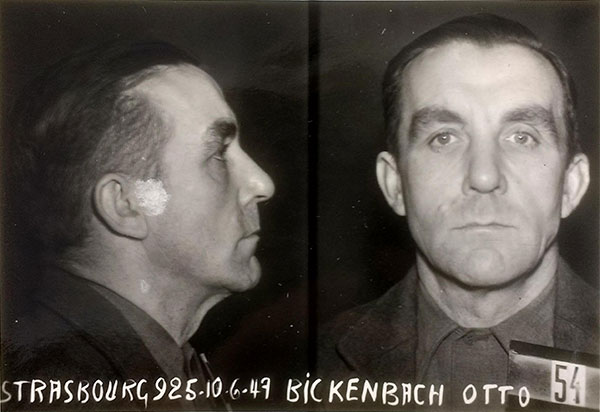
He was a professor of internal medicine, director of the medical polyclinic, and co-director of the research institute of the faculty of medicine. He was responsible for the construction of the gas chamber.
In April 1943, Bickenbach obtained Himmler’s authorisation to conduct experiments aimed at finding an antidote to phosgene gas. The first experiments took place in June and July 1943, with the support of a medical team made up of German and Alsatian doctors. On the 2nd of August 1943, the gas chamber became a lethal facility with the addition of a system that could use hydrogen cyanide salts.
Otto Bickenbach conducted a second series of experiments on the 15th of June and the 9th of August 1944 on 40 victims, including 16 “Gypsies”. In particular, it included subjects who had survived Eugen Haagen’s experiments from January to March 1944. Lethal doses claimed the lives of four deportees. Four others died from lesions to the lungs caused by the gas. The results of these experiments were used up until 1988.
August Hirt (1898–1945) and mustard gas
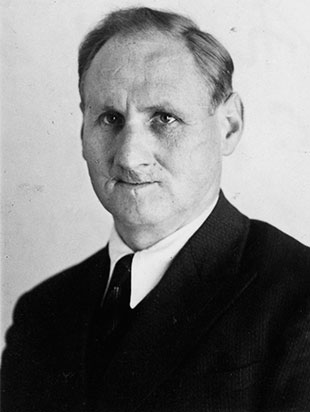
August Hirt, professor of anatomy and histology, was a devout Nazi and member of the SS. He set up a laboratory in the infirmary of the Natzweiler concentration camp, inside a barrack, which effectively became an annex of Section H. This laboratory had a treatment room, two patient rooms, and medical equipment. The first experiments using mustard gas were conducted on the 25th of November 1942, with the assistance of his assistant Karl Wimmer. The gas, which was applied to the skin in liquid form, caused skin lesions that were treated with cocktails of vitamins and medicines. At least seven prisoners were forced to take part in these experiments, three of whom died. Thirteen other probable victims have also been identified.
The anatomical collection
From January 1942 onwards, August Hirt sought to enrich the anthropological collection of his anatomy institute with “Jewish-Bolshevik skulls”, intended to demonstrate the supposed superiority of the Aryan race and to prove the existence of Jews after their extermination. The project soon evolved into the creation of a collection of “Jewish skeletons”.
From the 7th to the 15th of June 1943, 109 Jews were selected at Auschwitz for Hirt’s project. Only 86 were accepted after a further selection process. The convoy arrived on the 2nd of August 1943. They were placed in a separate barrack and were not registered. They were murdered in four waves, starting with the women on the 11th and 13th of August, followed by the men on the 16th and 18th of August. The bodies were transferred to the anatomy institute of the University of the Reich in Strasbourg, where they were kept for a year in the basement of the building. They were found by the French war crimes investigation unit on the 1st of December 1944.
Henri Henrypierre, one of Hirt’s assistants, received the bodies. He was suspicious because they arrived early in the morning outside of normal procedures, so he copied down their tattooed prisoner numbers. When the liberation took place, he handed them over to the French authorities. These documents were used in the trials against the doctors in 1952 and 1954, then filed away in the trail record, which was inaccessible to the public. The identities of the victims were revealed in September 2003 by Hans-Joachim Lang, which led to a commemorative plaque being mounted in the gas chamber.
Eugen Haagen (1898–1972) and exanthematic typhus
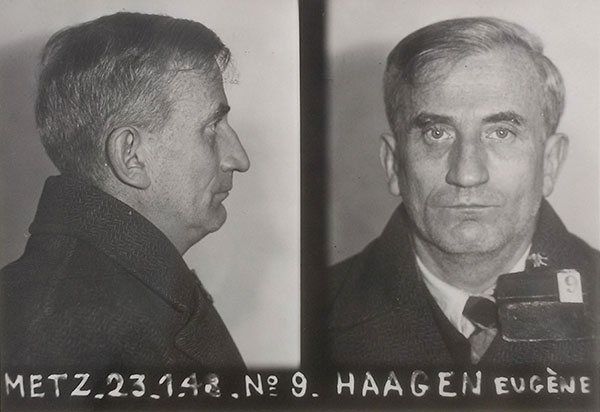
Before the war, Eugen Haagen, professor of hygiene and bacteriology and director of the institute of hygiene at the Reichsuniversität (University of the Reich) in Strasbourg, was a world authority in the field of vaccines (yellow fever, influenza, typhus, hepatitis).
His first experiments were conducted in 1942 at the Vorbruck-Schirmeck concentration camp. In December 1943, Haagen was granted access to KL Natzweiler to test a new typhus vaccine and study the causes of epidemic hepatitis. To achieve this, he “ordered” 189 human guinea pigs from KL Auschwitz.
The first convoy of 100 prisoners, which arrived on the 12th of November 1943, of whom 82 were still alive, was sent back on the 24th of December due to the deportees’ health being deemed unsatisfactory. The second convoy, comprising 89 “Gypsies”, arrived on the 12th of December. Haagen conducted his experiments on his new vaccine from the 25th of January to the 25th of May 1944 on 80 men from this convoy. The victims suffered from high fevers and fatigue, but no deaths were recorded directly during the experiments. However, out of the 189 prisoners selected, 29 died as a result of their transfer to Natzweiler.
These experiments may have been the cause of a typhus epidemic that broke out in the camp between April and June 1944. Another hypothesis points to a convoy from Lublin, which arrived on the 4th of April 1944, and which contained cases of typhus.
The human toll
At least 144 people died directly or indirectly, and 178 others suffered bodily harm.
The trials
Eugen Haagen and Otto Bickenbach were sentenced to life imprisonment with hard labour on the 24th of December 1952 by the military court in Metz. August Hirt, sentenced to death in absentia, had in fact committed suicide on the 2nd of June 1945 in the Black Forest, which the courts were unaware of. The two doctors appealed and in June 1954, they were sentenced to 20 years’ hard labour by the military court in Lyon. They were granted a presidential pardon in 1955: Bickenbach resumed his medical practice in Siegburg, while Haagen worked for the Federal research institute for virus diseases of animals in Tübingen.
From the 1990s onwards, a new interest emerged in medicine under Nazism. In 2016, the University of Strasbourg appointed an independent historical commission following accusations made by Michel Cymes in 2015 and revelations by Raphaël Toledano concerning the existence of human remains in forensic medicine collections. The commission’s report was published in May 2022.
To find out more
STEEGMANN Robert, Struthof. Le KL-Natzweiler et ses kommandos : une nébuleuse concentrationnaire des deux côtés du Rhin. 1941-1945, Strasbourg, La Nuée Bleue, 2005, p. 391-407.
BONAH Christian, GAUME Sandrine, LANG Hans-Joachim, LUTZ Loïc, MOSER Gabriele, SCHMALTZ Florian, La médecine nazie contre l’humanité. Expérimentations médicales au camp de concentration de Natzweiler-Struthof, Paris, Tallandier, 2024.
Source
Page cover photo: archives City of the Strasbourg Eurometropolis – FI_139_8