


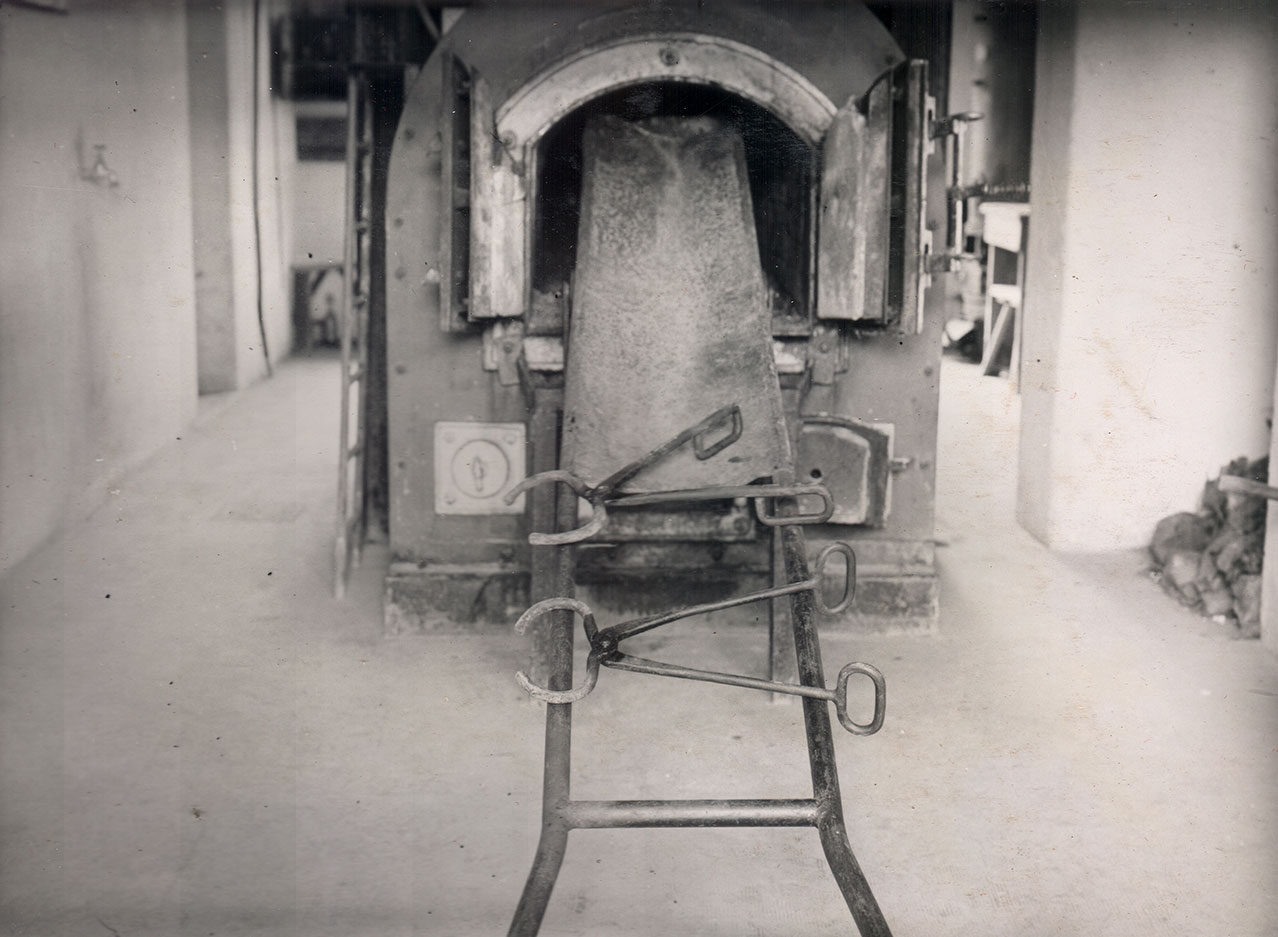
The cremation furnace
CONTENTS
- A temporary crematorium close to the gas chamber
- The construction of the permanent crematorium
- How the crematorium worked
- The massacres of September 1944
- The use of crematoriums in the subcamps
Visible in the building located to the right below the camp, the crematorium at the Natzweiler’ concentration camp epitomises the Nazis’ policy of the absolute annihilation of their enemies, extending as far as their very bodies.
A temporary crematorium close to the gas chamber
Up until the 10th of February 1943, the bodies of dead deportees were taken to the Strasbourg-Robertsau crematorium. Death certificates were registered at Natzwiller town hall.
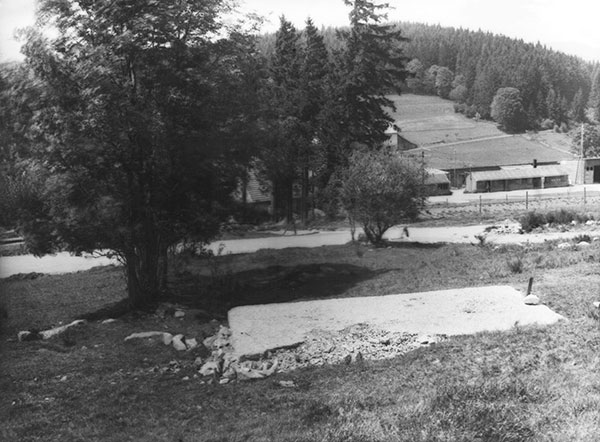
The temporary cremation furnace was commissioned on the 3rd of February 1943. It is located less than 100 metres from the inn, on the bend in the new road. The cremation furnace was a rudimentary installation: it was housed in a simple wooden hut, perhaps similar to the one at Bergen-Belsen. All that remains today is a concrete slab.
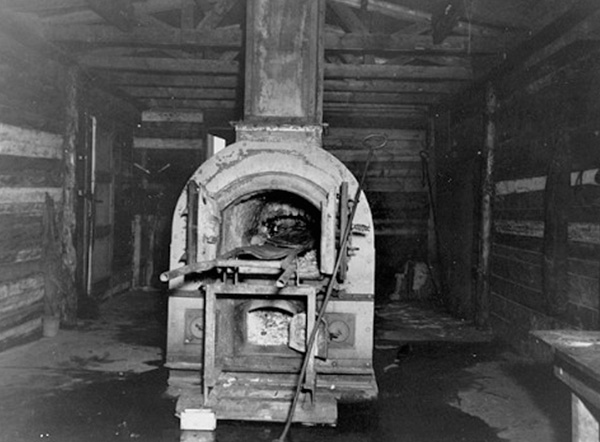
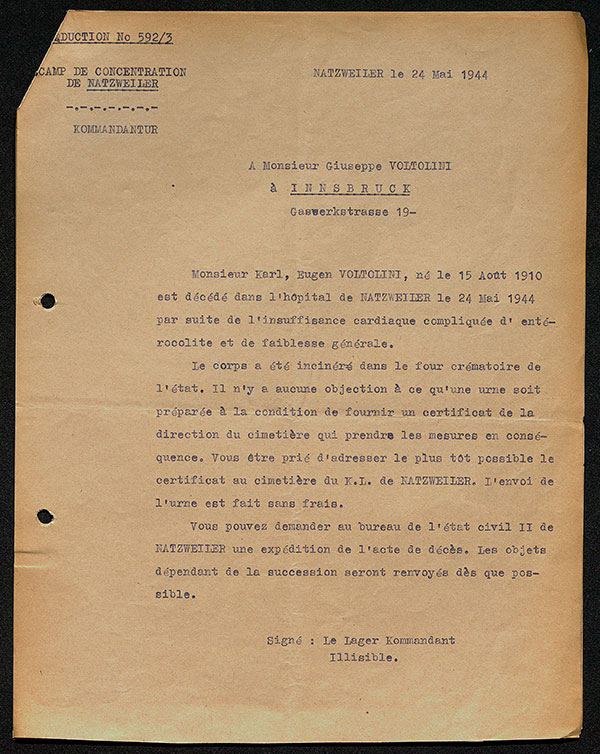
The bodies were stored in a mortuary located in one of the workshops adjoining the hotel, probably the small annex next to the garage. The cremation furnace fell under the responsibility of SS officers Jehle and Kormann – both from the camp’s motor transport unit – and SS-Hauptscharführer Peter Straub. Deaths were no longer recorded at Natzwiller town hall but directly at the camp, in the political section (Politische Abteilung). Death was henceforth shrouded in the strictest secrecy: the deaths, their recording in the civil register, and the cremations on Wednesdays and Saturdays never left the confines of KL Natzweiler.
The construction of the permanent crematorium
Work on the future crematorium began on the 28th of April 1943. A Kommando of 30 prisoners was engaged in earthworks for the construction of the new building and transporting the necessary materials (sand and gravel). Work was completed on the 9-meter-high chimney on the 14th of October.
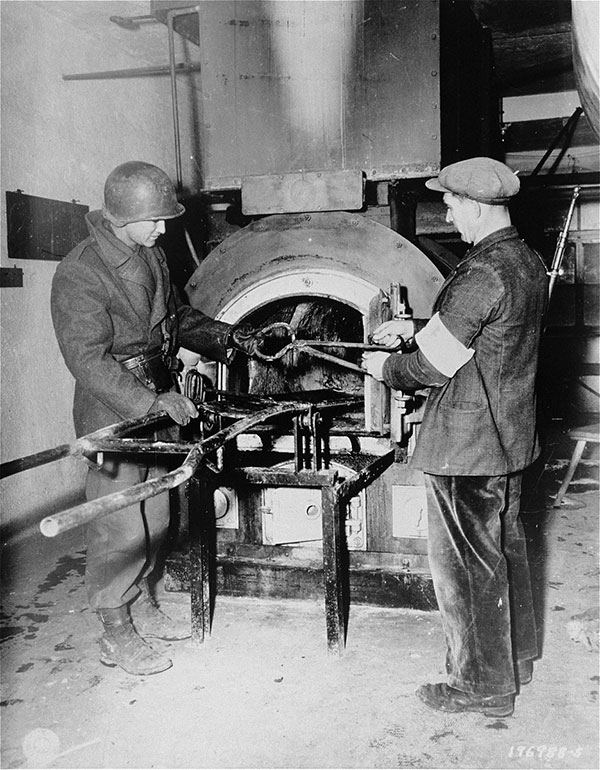
The temporary crematorium was dismantled on the 1st of October and was fully reassembled in the new building by the 22nd of October. Originally running on fuel oil, it was later converted to run on coke. Under the supervision of SS Straub, a Kommando of five prisoners worked at the crematorium.
How the crematorium worked
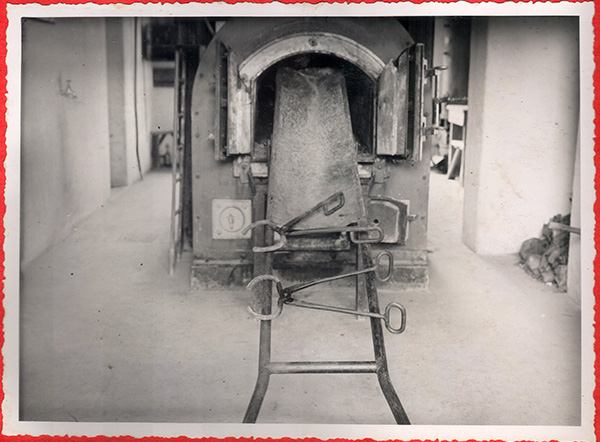
The furnace was only lit when there were enough bodies in the mortuary (at least six) located in the basement, which was connected to the furnace room by a goods lift. On average, it was used three times a week. Before cremation, two prisoners recovered any gold teeth and dentures for the benefit of the SS war economy. The furnace did not work continuously. Two bodies could be cremated together, head to toe. Once the furnace was fully heated, cremation took around 35 minutes. The heat generated was used to heat the building and the water for the showers.
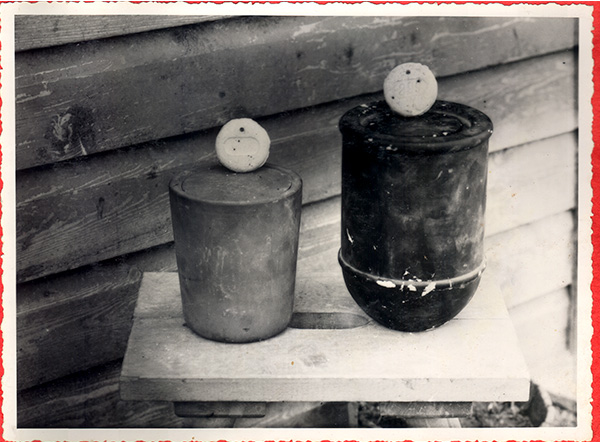
There was a specific procedure for “Germanic” prisoners. Families were notified prior to the cremation and had 24 hours to contact the camp. They had three days to see the body. At the time of cremation, a stone bearing the identification number was placed in the mouth to identify the remains. The ashes were collected and placed in urns stored in an adjoining room. Families could purchase urns at the following prices: 50 RM (red terracotta) – 60 RM (black terracotta) – 70 RM (enamelled steel). This procedure did not apply to the other prisoners: their remains were thrown into the ash pit.
The massacres of September 1944
The cremation furnace was used continuously during the massacre of 141 resistance fighters from the Alliance network and the Groupe Mobile Alsace-Vosges on the night of the 1st to the 2nd of September 1944. Over two days, the flames rose four to five metres high above the chimney.
The use of crematoriums in the subcamps
Up until August 1944, all the subcamps used the crematorium at the main camp in Struthof. From September to the end of October 1944, the camps of the Wüste group used the crematorium in Reutlingen. In the Neckar Valley, the deceased were cremated in Heidelberg. The first victims who died in Schömberg, Schörzingen, Spaichingen and Erzingen were cremated in Schwenningen.
To find out more
Robert Steegmann, Struthof. Le KL-Natzweiler et ses kommandos : une nébuleuse concentrationnaire des deux côtés du Rhin. 1941-1945, Strasbourg, La Nuée Bleue, 2005, p. 309-313.
Juliette Brange, Etude architecturale et fonctionnelle de l’ancien camp de Natzweiler-Struthof (67). Croisement des données archivistiques et archéologiques. Volume 2: étude des structures, 2nd-year Master’s thesis supervised by Michaël Landolt and Jean-Jacques Schwien, Faculty of Historical Sciences, University of Strasbourg UMR 7044, 2020-2021.
DCAJM (Central military justice archive repository): Natzweiler trial, 1958.