


The marking of deportees at KL Natzweiler
CONTENTS
- A tool for dehumanisation and control
- The prisoner number, nothing more than just a number
- Coloured triangles, to classify deportees
- Coloured circles
- Specific signs at Natzweiler
A tool for dehumanisation and control
At the Natzweiler concentration camp, prisoners were made readily identifiable by the SS and Kapos — prisoners tasked with supervising other prisoners, often chosen for their brutality — thanks to a system involving numerical and visual markings. They were reduced to a mere number and a coloured triangle, thus losing their identity: the individual disappeared behind the bureaucratic and murderous logic of the Nazi regime.
The prisoner number, nothing more than just a number
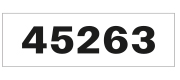
The prisoner number was a series of numbers that became the deportee’s sole identity in the camp. Their first and last names no longer existed.
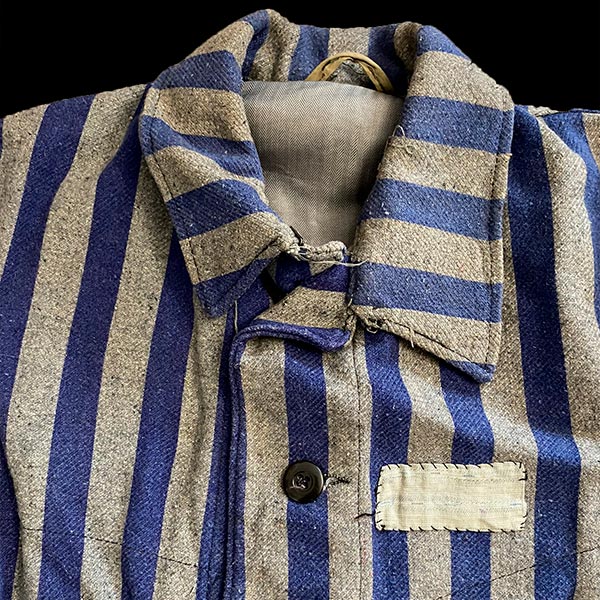
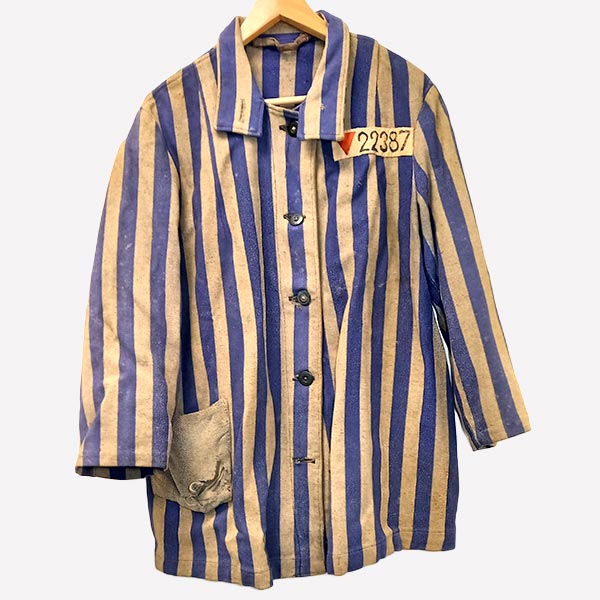
This number was written on a piece of fabric sewn onto the jacket, often placed above or below the coloured triangle. A second number was sewn onto the left thigh.
Coloured triangles, to classify deportees
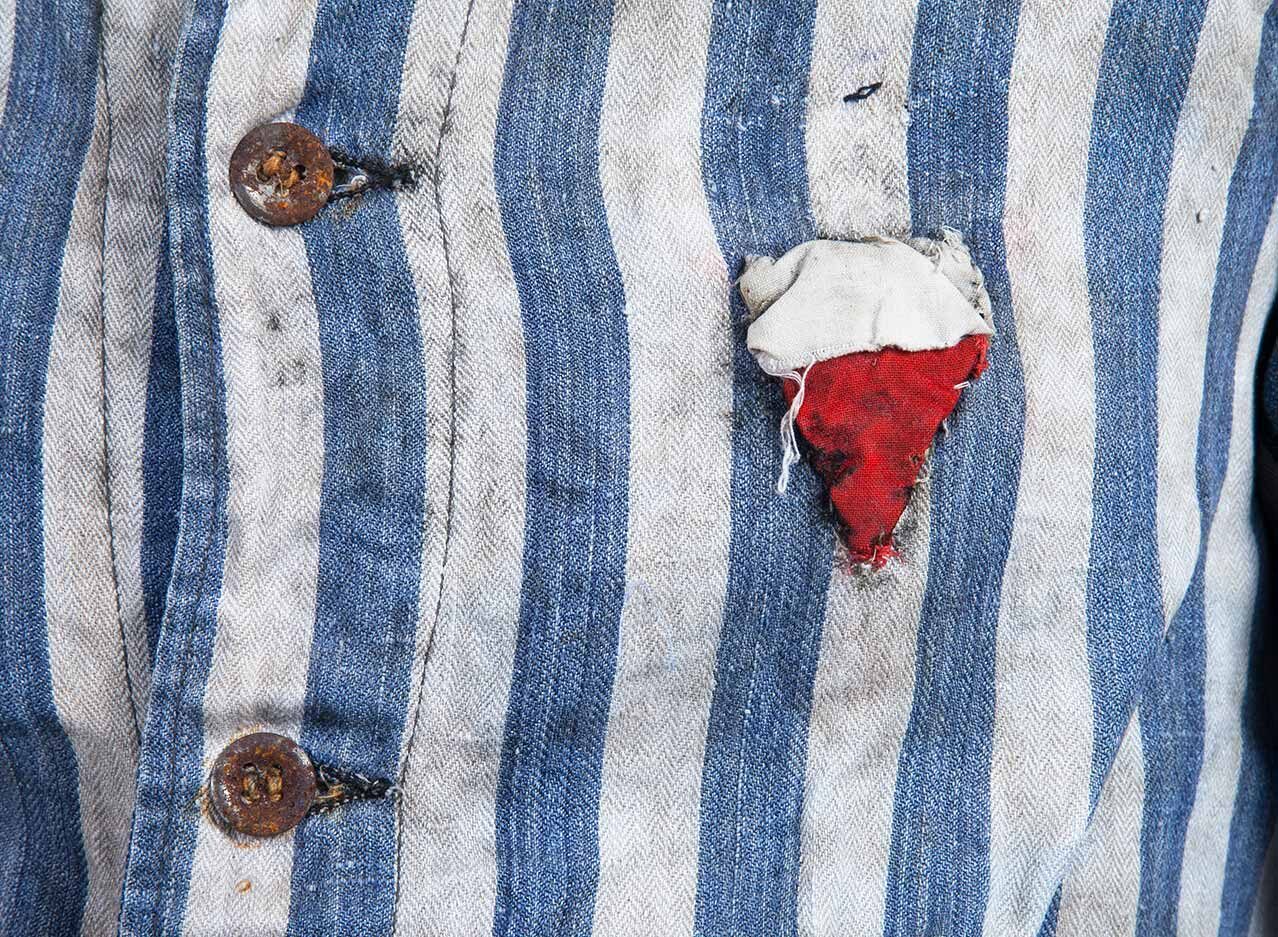
The triangular insignia identified the reason why the deportees were imprisoned by the Nazis. They were used by guards to quickly identify prisoners while facilitating the use of violence against certain individuals, particularly those marked with red triangles, who were political deportees.

Black triangle: people considered to be “misfits” — this included a wide range of profiles: people with mental illnesses, people with disabilities, alcoholics, drug addicts, tramps, beggars, Roma and Sinti, etc.

Brown triangle: “Gypsies”, Roma and Sinti

Green triangle: prisoners in preventive detention on the orders of the Nazi criminal police (Kripo), nicknamed “Berufsverbrecher or BV”, meaning “professional criminals”. These prisoners were sent to KL Natzweiler following long or repeated sentences, even for minor offences.

Green triangle, pointing upwards: criminals from the green triangle group awaiting sentencing or due to serve their sentence. They were subjected to the hardest forced labour.

Purple triangle: Jehovah’s Witnesses

Pink triangle: homosexuals

Yellow triangle: Jews. For this marking, one variant consisted of a coloured triangle on top of a yellow triangle, forming a two-coloured star. Thus, a deportee identified as a Jewish political prisoner could bear the red triangle with a yellow triangle.

Red triangle: political prisoners. A letter inside the triangle indicated their nationality: B for Belgians (Belgier); E for English (Engländer); F for French (Franzosen); I for Italians (Italiener); J for Yugoslavs (Jugoslawen); N for Dutch (Niederländer); P for Poles (Polen); R for Russians (Russen); S for Spaniards (Spanier); T for Czechs (Tschechen).

Red triangle pointing upwards: former member of the Wehrmacht (Nazi German army) sent to special disciplinary sections and, if no change was found, sent to a concentration camp. They were registered as SAW (Sonderaktion Wehrmacht, Sonderabteilung Wehrmacht).

Blue triangle: people considered as being stateless. Originally, this triangle was used to identify emigrants, Spanish Republicans, German citizens who had lost their nationality after 1933, returnees, and people suspected of espionage.
Coloured circles
These were placed below the triangle and on the back, between the shoulder blades. They also appeared on the tops of caps. They were used to quickly identify certain prisoners based on their status or presumed behaviour.

Red circle on white rectangle: Fluchtpunkt — considered as dangerous. Used to mark prisoners who had been caught after escaping, those who had attempted to escape, or those who were simply suspected of planning to escape.

Yellow circle on white rectangle: Gelbpunkt — prisoners deemed to be dangerous, requiring close supervision.

Black circle on white rectangle: Strafkompanie — prisoners assigned to the disciplinary unit. They were subjected to particularly harsh conditions: no mail, reduced rations and the hardest labour.
Specific signs at Natzweiler
Some markings were specific to the Natzweiler camp and were in addition to the triangle or circle systems.

Nacht und Nebel : deportee Nacht und Nebel (Night and Fog)

SU: abbreviation for Sowjetunion (“Soviet Union”).
This was used to identify Soviet prisoners of war or former prisoners who had become civilian workers. In other camps, there was the designation SUK (Sowjetunion Kriegsgefangener).
Paint
Stripes of coloured paint were sometimes applied to prisoners’ clothing.
Yellow paint: used to guide dogs to attack certain areas of the body (arms and legs). They had previously been trained by attacking dummies daubed with yellow paint.
Originally, prisoners wore a yellow stripe from the shoulder to the wrist on each arm, another along the legs, and yellow circles around the elbows, knees and ankles. The system was completed with a yellow strip of paint around the waist.
Red paint reserved for political deportees — Nacht und Nebel or NN — to distinguish them from other prisoners considered as dangerous.
Crosses
Crosses painted on the back and on the cap were also used to quickly identify prisoners:

Yellow crosses for dangerous prisoners

Red crosses for political deportees — Nacht und Nebel or NN
These crosses could be painted directly onto the jacket or made from strips of fabric sewn together.