The Camp today
Remains and the Camp Museum
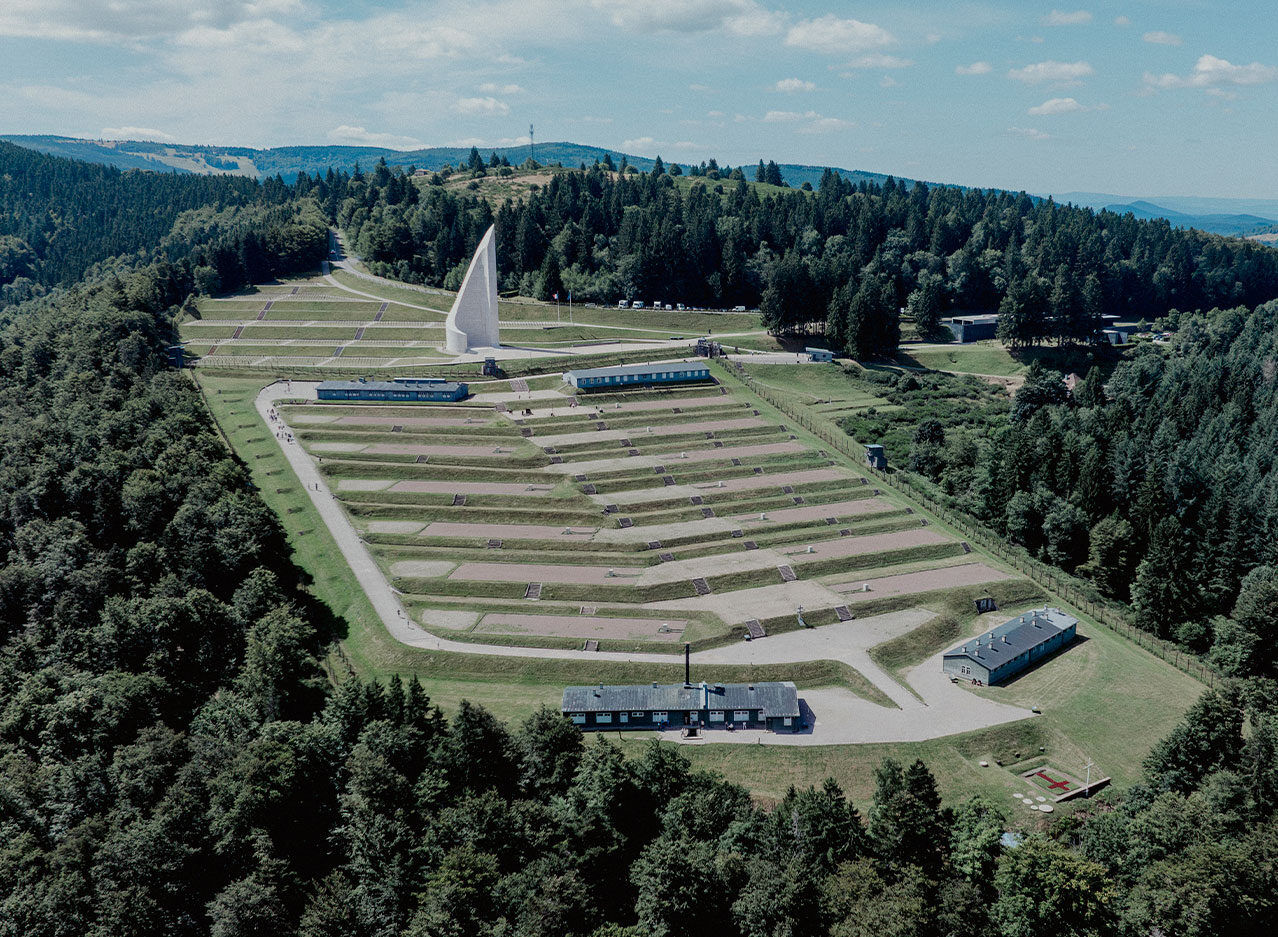
Today, the site serves as an important memorial and a place that conveys the history of the deportation. The memorial, which has been a listed historic monument since 1951, offers visitors the chance to explore several of the camp’s most iconic sites, which serve as reminders of the Nazi concentration camp system and the fate of the deportees.
CONTENTS
➔ The European Centre of Deported Resistance Members and the Kartoffelkeller
➔ The grounds of the upper camp
The European Centre of Deported Resistance Members and the Kartoffelkeller
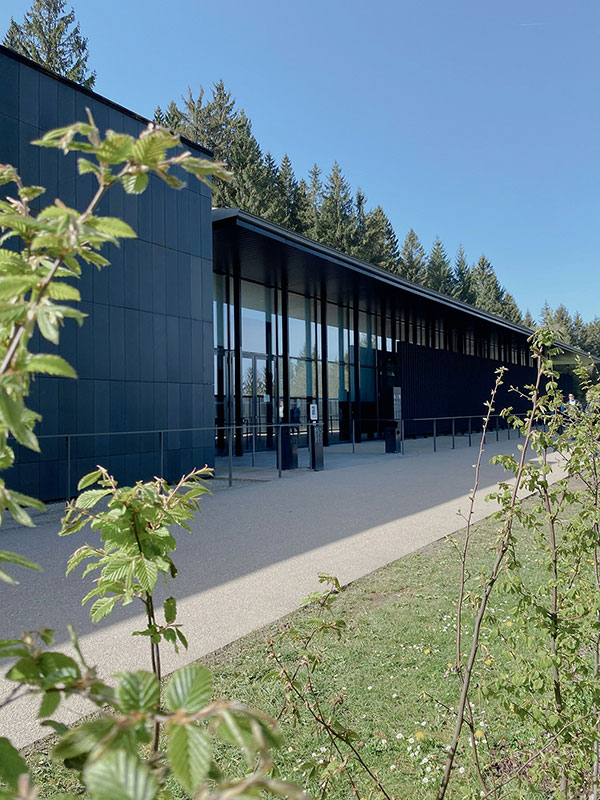
The tour begins at the European Centre of Deported Resistance Members, which serves as an essential introduction to exploring the site. Its permanent exhibition traces the history of the Second World War, the European resistance movements and the deportations, through interactive display terminals, a film, archive documents and scores of photographs. The tour may also include temporary exhibitions, subject to scheduling.
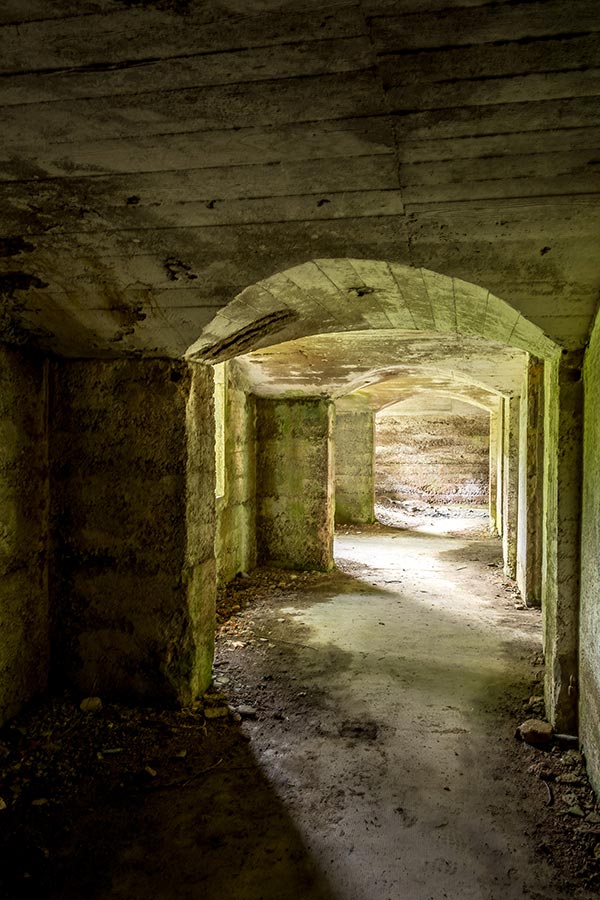
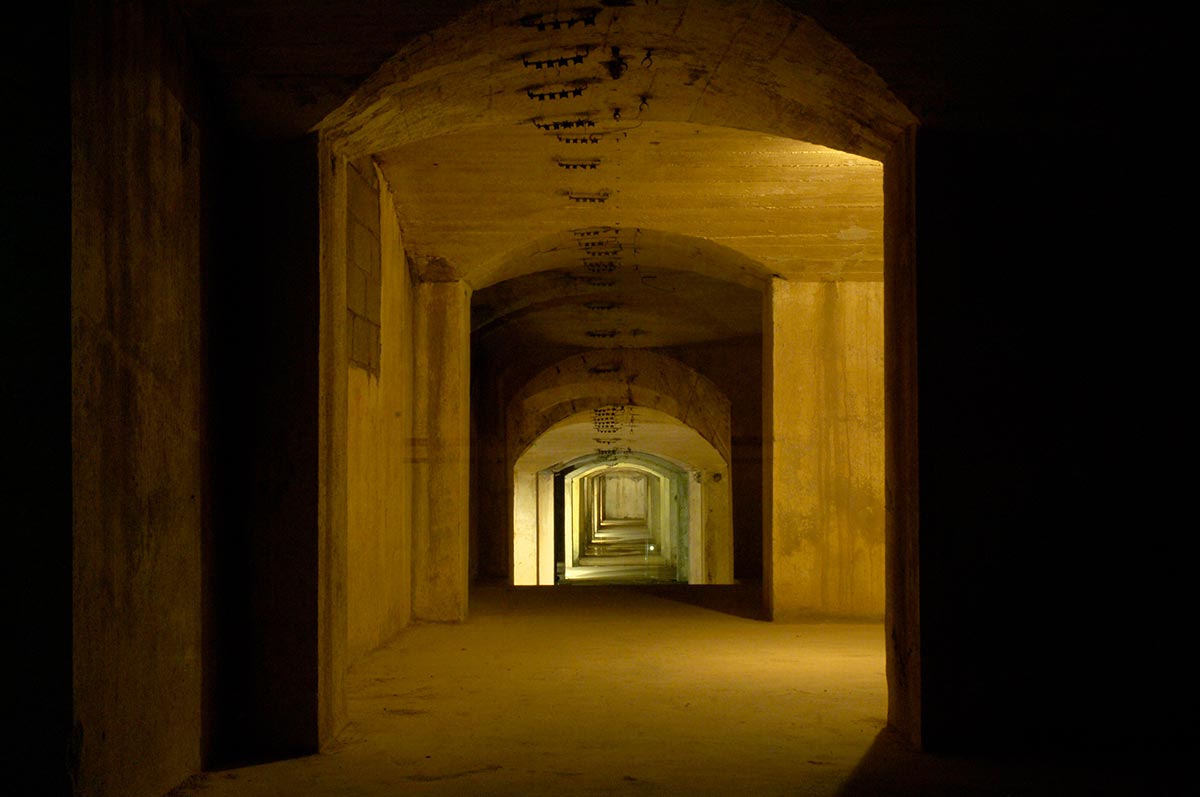
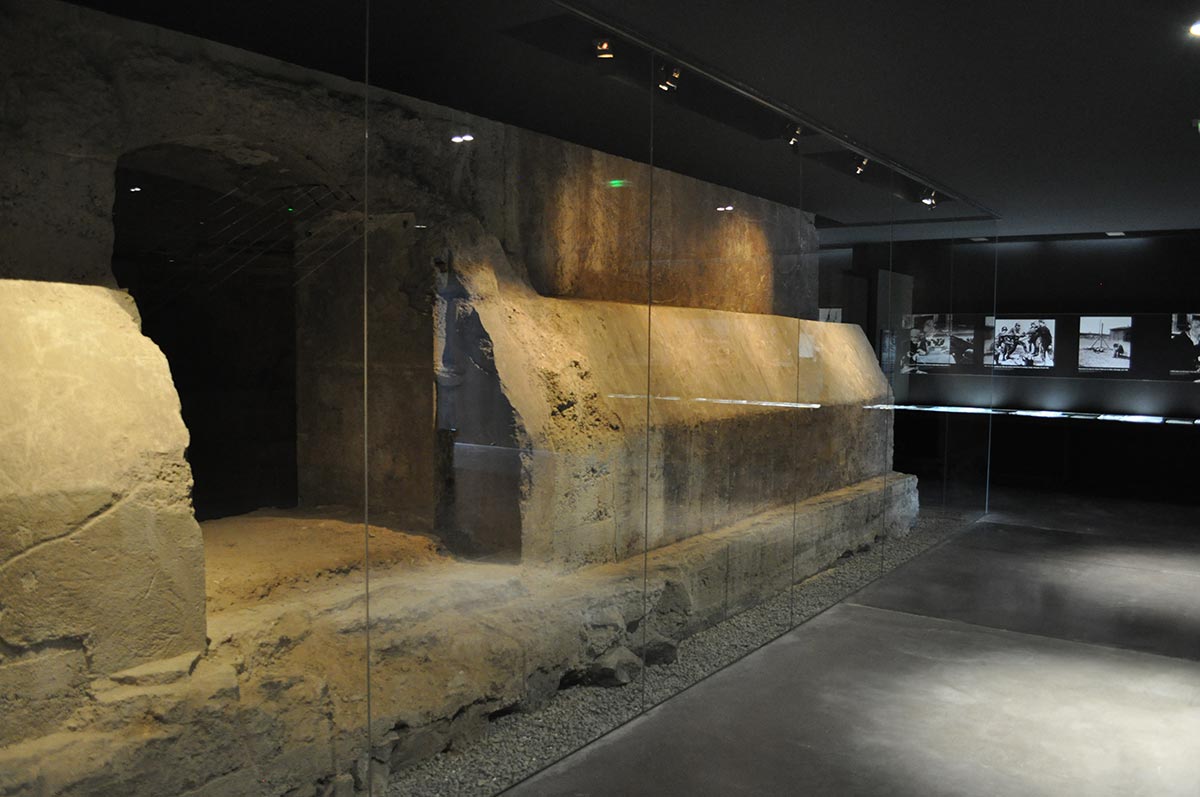
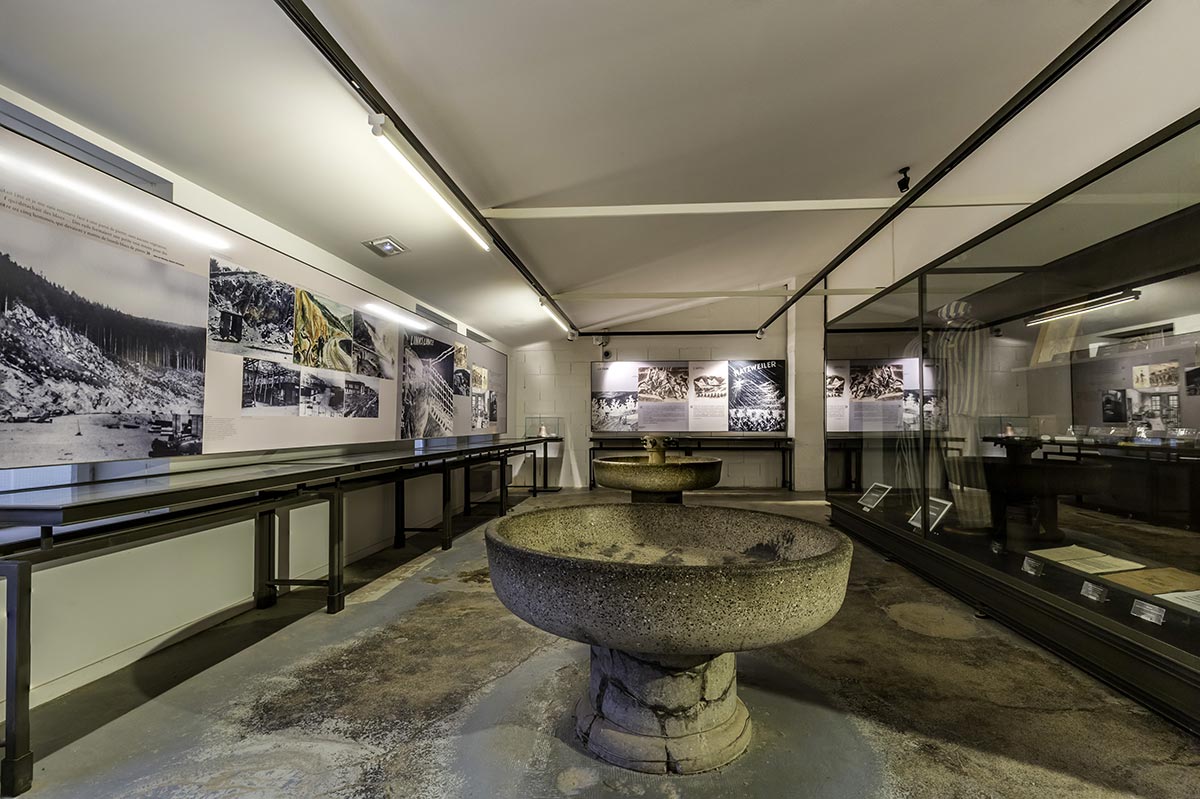
Officially opened in 2005 by the President of the Republic, Jacques Chirac, the building stands on an impressive 120-metre-long reinforced concrete cellar: the Kartoffelkeller (“potato cellar”). It was built by the deportees and was used to store food supplies for the camp.
The European centre also houses the memorial’s administrative offices and a rest area for visitors.
-

The European Centre of Deported Resistance Members , Centre européen du résistant déporté -
The interior of the Kartoffelkeller, which means “potato cellar” in German – underneath the European Centre of Deported Resistance Members © Jacques ROBERT SGA DMPA -
The remains of the interior of the Kartoffelkeller © Pierre Louis Faloci
The grounds of the upper camp
As you leave the European Centre of Deported Resistance Members, you will follow a long path leading to the camp entrance. It leads to the main gate, the only entrance to the concentration camp grounds.
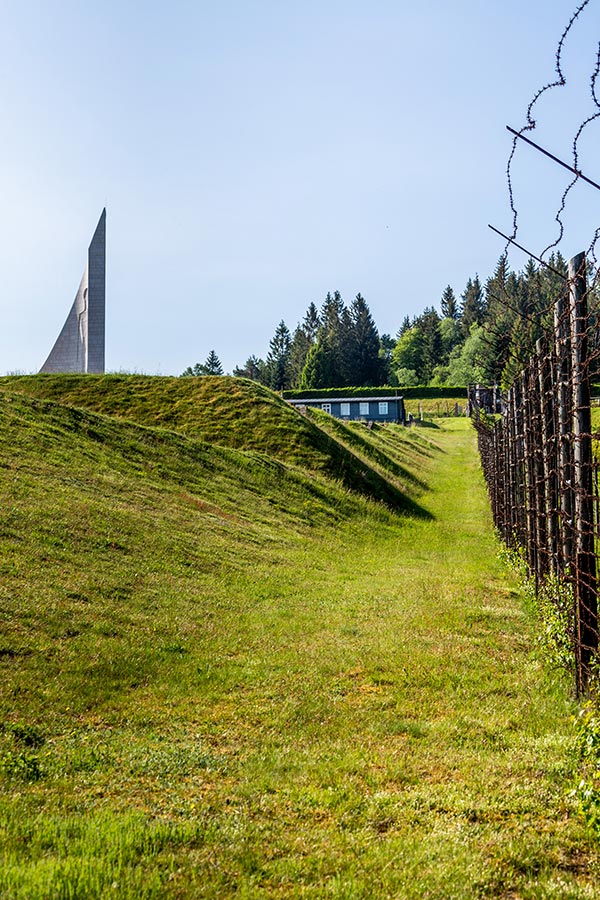
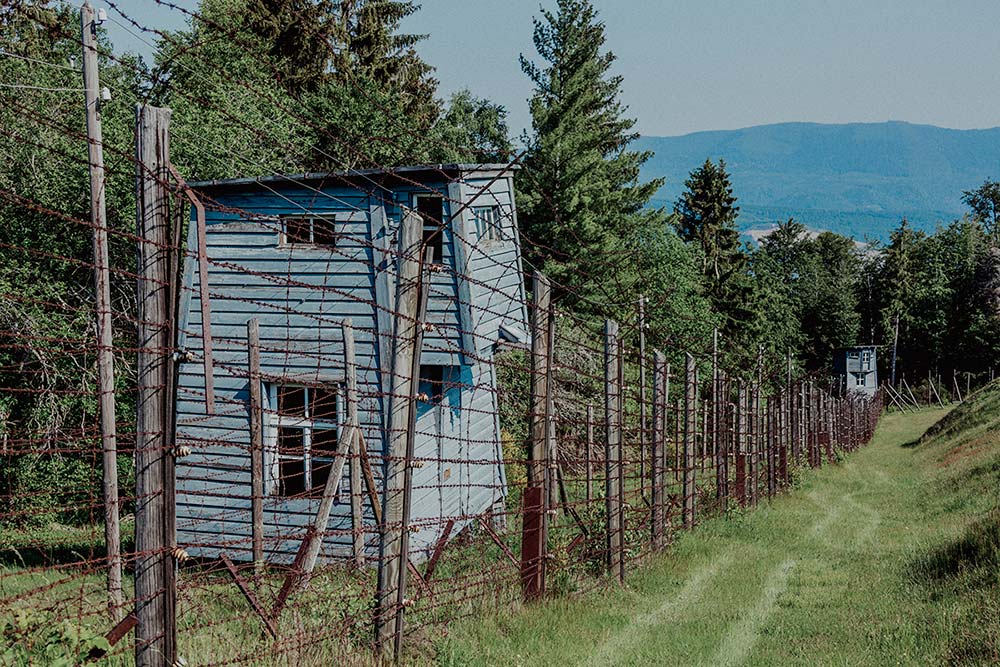
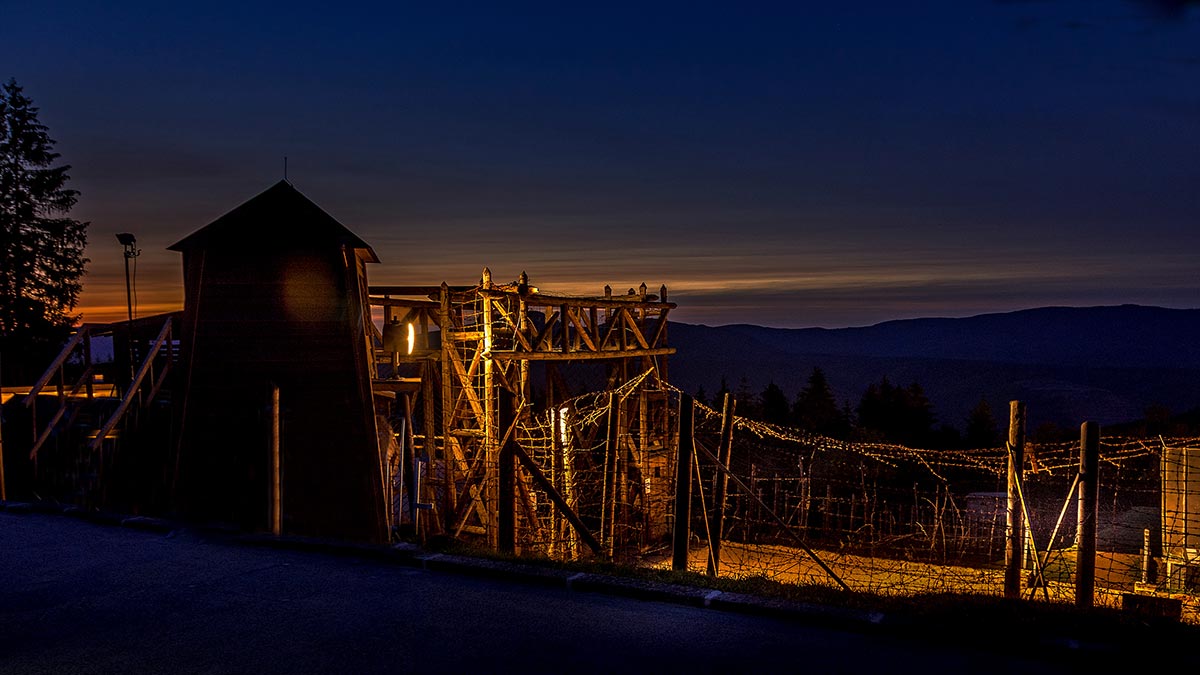
The current double-leaf wooden gate dates from the immediate post-war period, probably around the time when the administrative internment camp was converted into a prison, between 1945 and 1946, and after it had been a Nazi concentration camp. It is surrounded by a double barbed-wire fence, which used to be electrified and is nearly three metres high, overseen by watchtowers positioned at regular intervals.
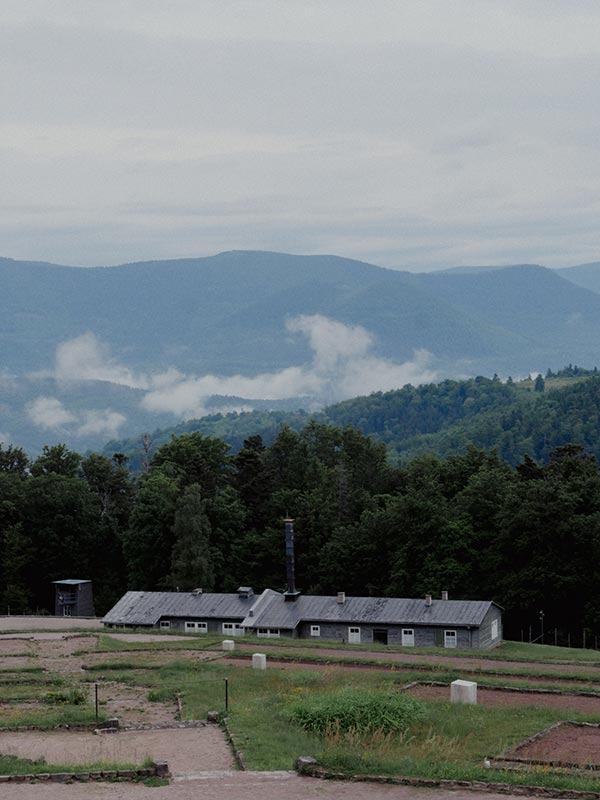
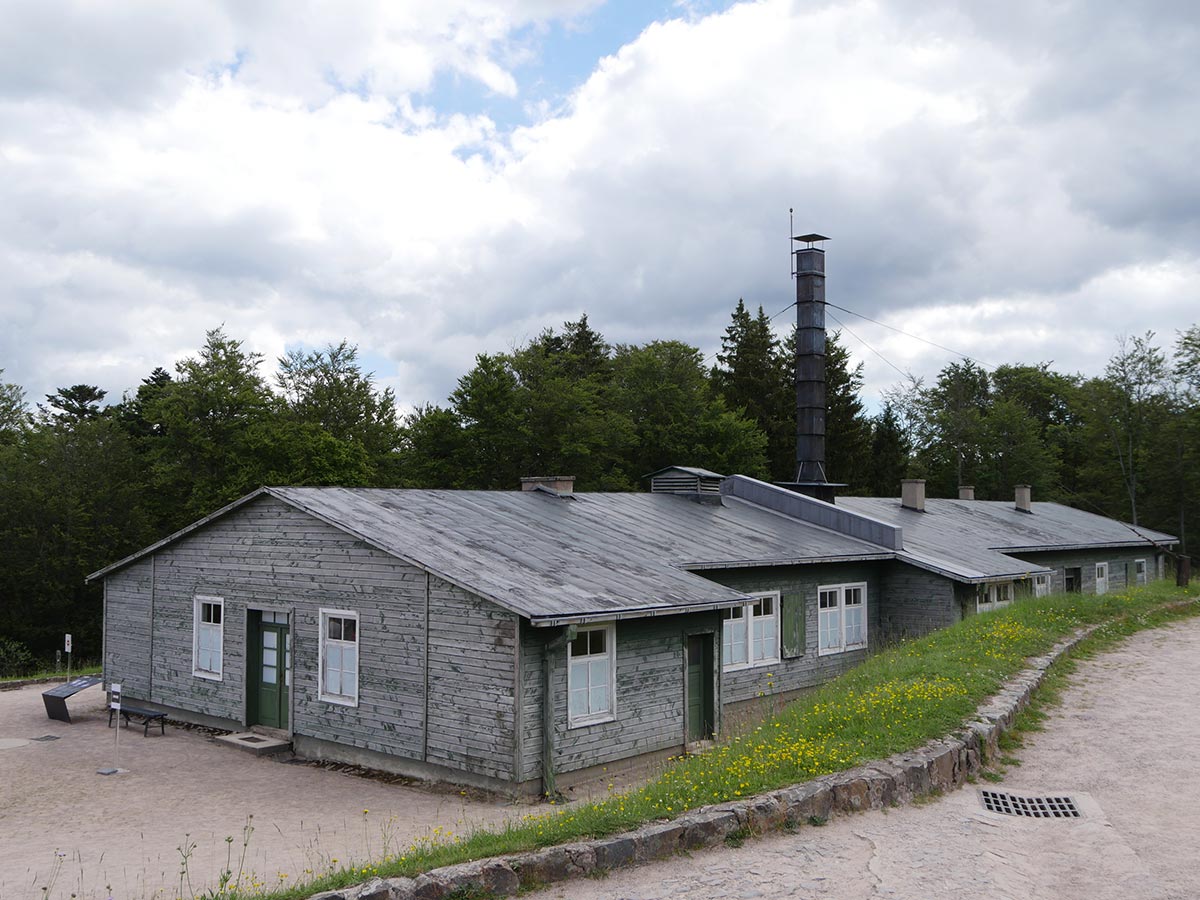
The camp is laid out in a series of terraces covering the mountainside. Each level contained the Blocks, or barracks where the deportees lived, whilst the roll-call areas occupied the space between the buildings.
Today, the sites where the Blocks once stood are now marked by red gravel and white memorial steles bearing the names of the Nazi concentration camps in various European countries. All but four of the barracks were dismantled and burned down in 1954.
The museum, prison and crematorium barracks
The museum barracks, located in the upper part of the camp, are the first stop on the tour of the grounds. They trace the history of KL Natzweiler, the daily routine of the deportees and the workings of the Nazi concentration camp system.
As you continue the tour, you will reach the roll-call areas, where prisoners were assembled every day. A gallows, which is not the original one, serves as a reminder of the executions that once took place there.
Further down are the prison barracks, comprising around twenty cells, each measuring approximately 8 to 10 m². They were built inside the camp and were used to confine prisoners who had been punished or sentenced to death.
The last building is the cremation barracks. These barracks were completed in October 1943 and can easily be recognised by the tall chimney. It incorporated several functions relating to the arrival of prisoners and to death.
The west wing of the building was dedicated to the hygiene of the deportees: changing rooms, showers and disinfection facilities. This area is only accessible as part of a guided tour.
The wing notably contained the autopsy room, the office of the medical staff, the urn room and the room containing the cremation furnace. Near the furnace, commemorative plaques pay tribute to the victims, and in particular, the four female SOE agents executed in July 1944, as well as the resistance fighters from the Alliance network and the Alsace-Vosges Mobile Group (GMAV).
In the pit below the camp lies the ash pit, where the ashes of bodies cremated in the crematorium were disposed of. A memorial wall there now features commemorative plaques dedicated to the various nationalities and categories of deportees.
The “ravin de la mort” (The ravine of death)
Near the national necropolis, there used to be a place known as the “ravine of death”. No physical remains are visible today, but this episode remains a symbol of the brutality of the concentration camp system.
In July 1943, eight prisoners were deliberately pushed outside the camp fence so that they could be shot by SS guards under the false pretext of attempting to escape.
Read: The “ravin de la mort” (The ravine of death)
The lower camp and the gas chamber
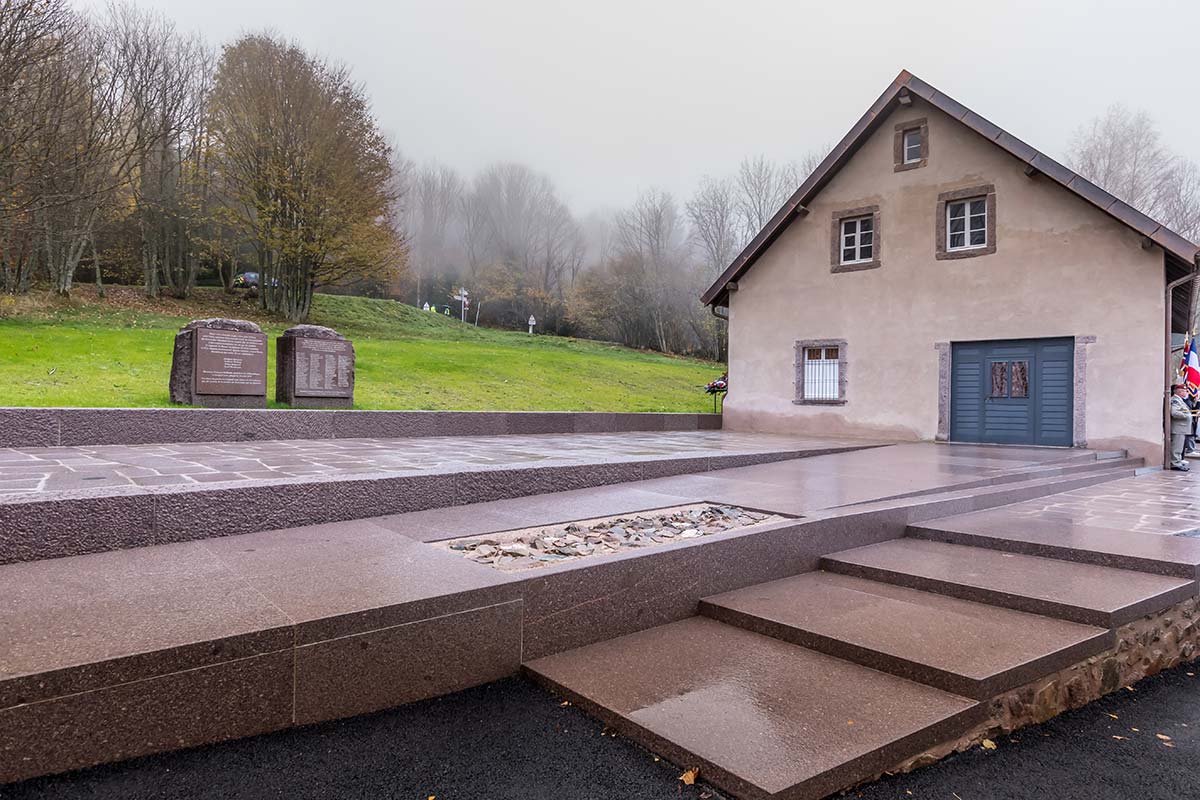
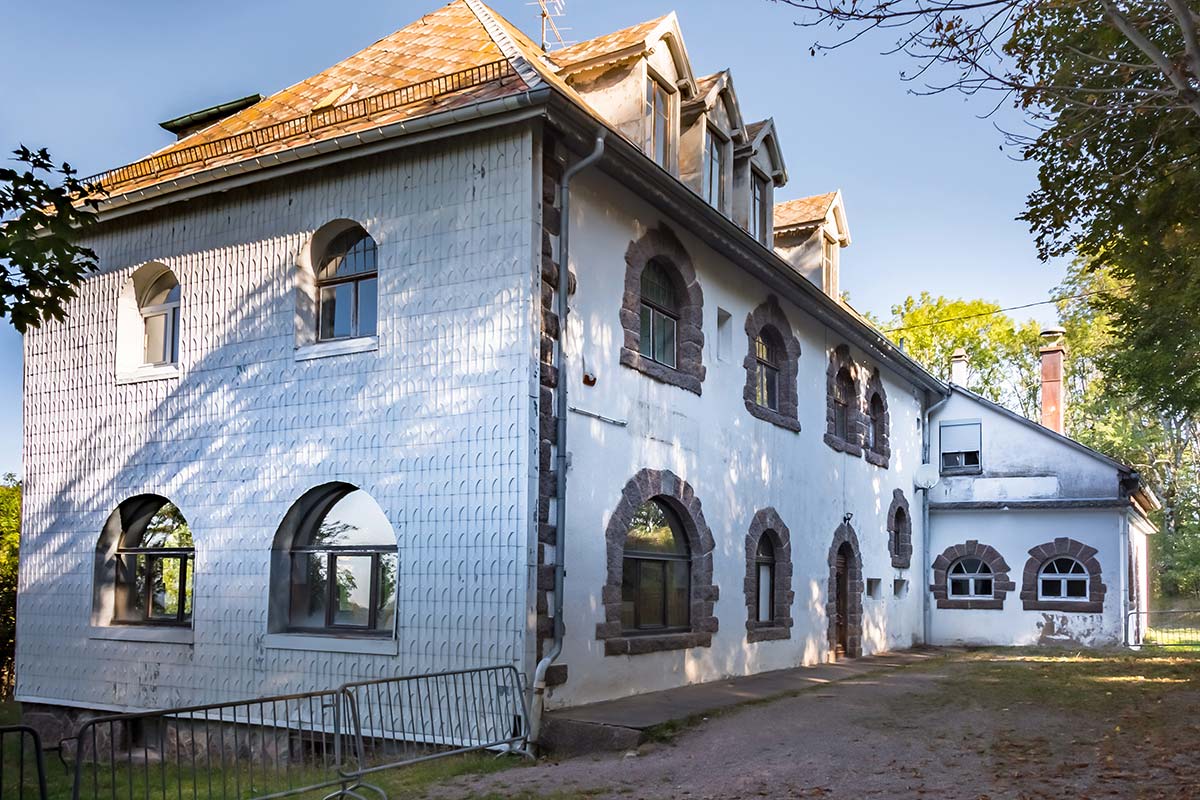
Located approximately 600 metres on foot from the upper camp (or 1.5 km by road), the lower camp comprises two main buildings: the former Struthof Inn and the annexe housing the gas chamber.
These places were mainly used to house the first deportees while the camp was being built.
The Inn
Built in 1906, the Struthof Inn was originally a holiday resort. During the Nazi occupation, it was requisitioned and used by the camp administration.
The building, which is now owned by the French Ministry of the Armed Forces, forms part of the memorial site but is not open to the public.
The annexe building and the gas chamber
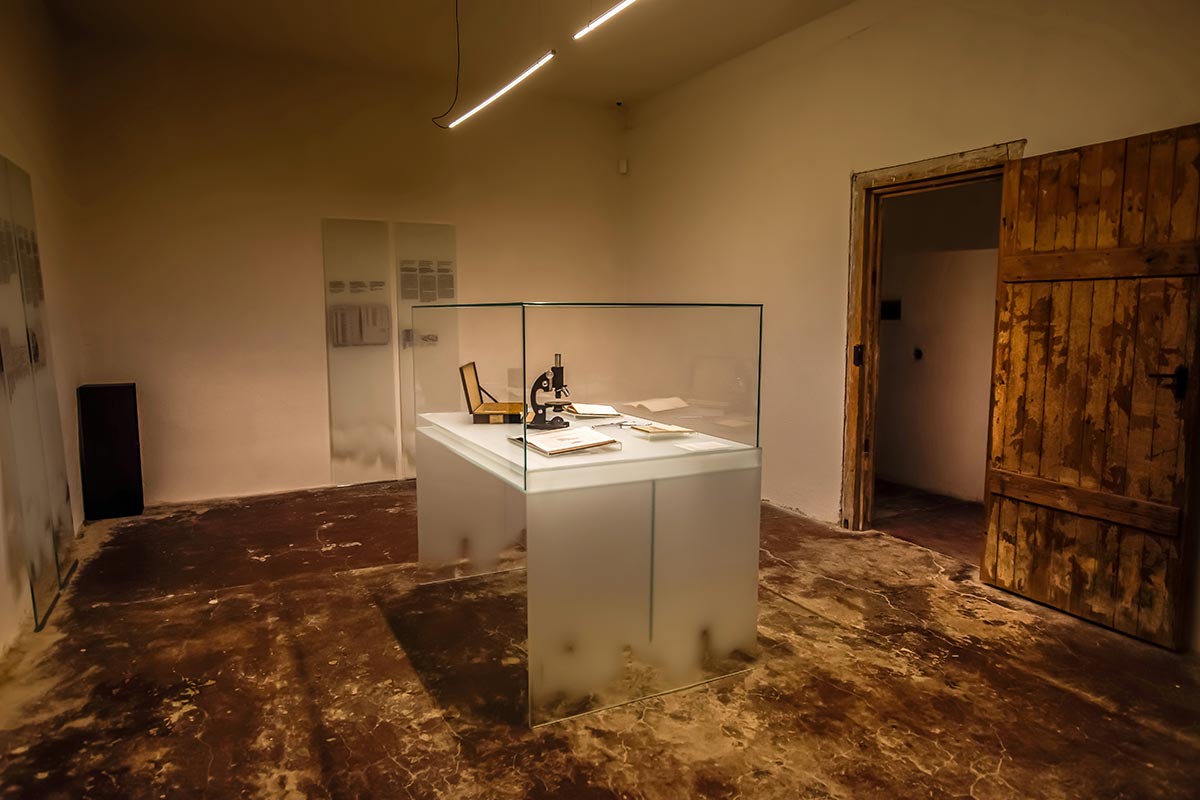
The gas chamber was constructed between autumn 1942 and April 1943 in the annexe of the inn, which was formerly a ballroom.
This room, measuring approximately 9 m², was used for medical experiments conducted by doctors from the Reichsuniversität Straßburg, the Nazi university in Strasbourg.
In August 1943, 86 Jews were murdered there in order to compile a collection of skeletons for Professor August Hirt.
Today, the annexe houses an exhibition tracing the history of the building and the fates of the victims of the Nazi experiments. A memorial stele pays tribute to the victims on the forecourt.
The national necropolis
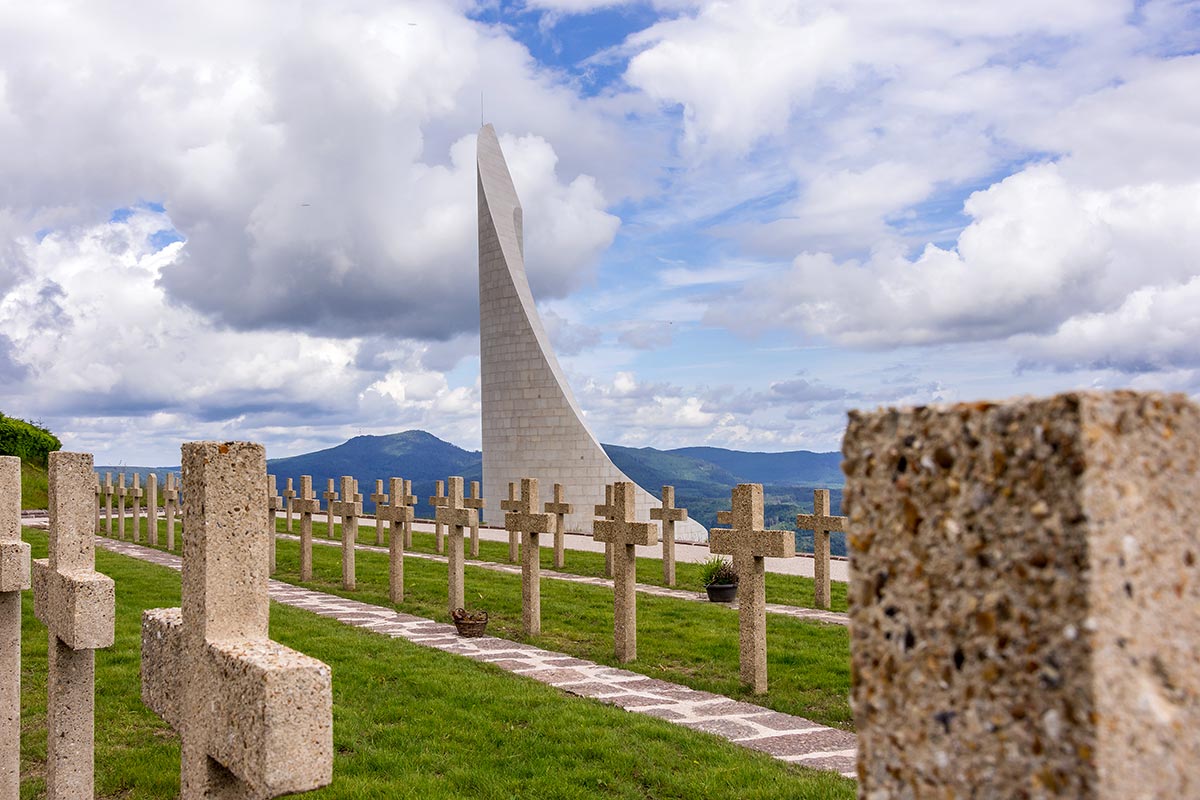
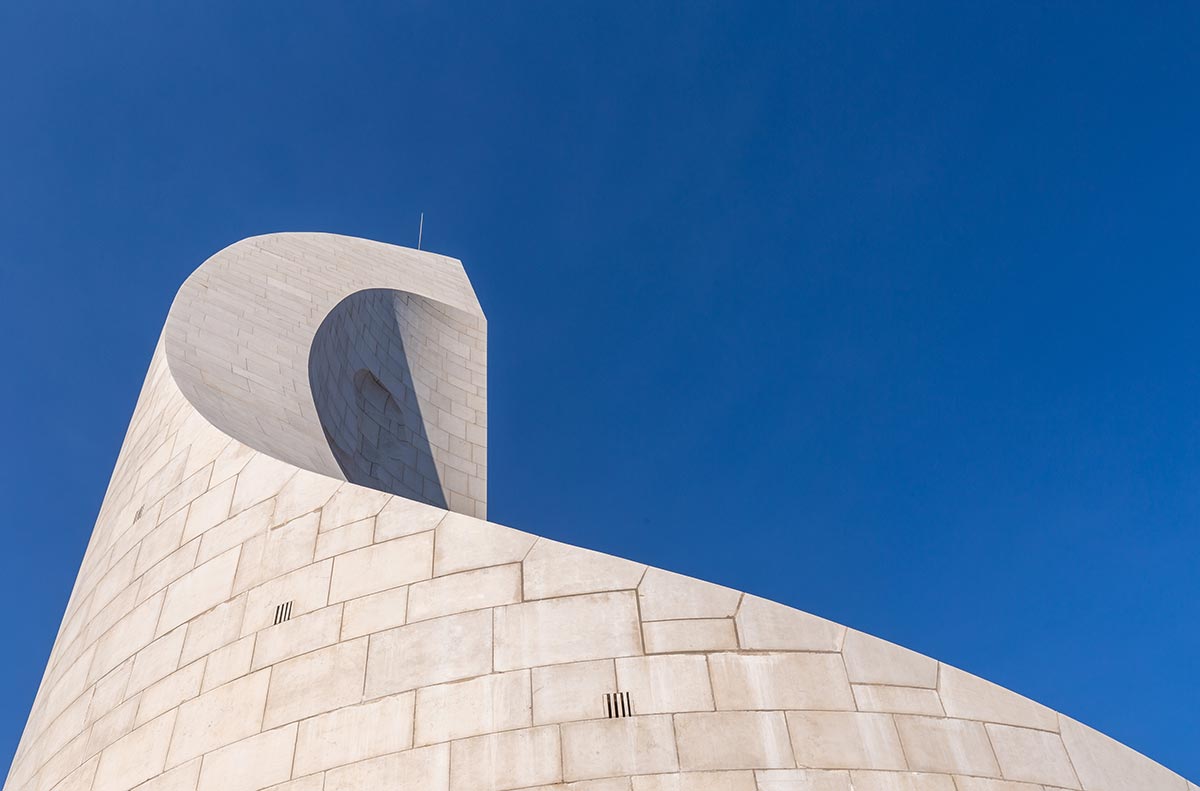
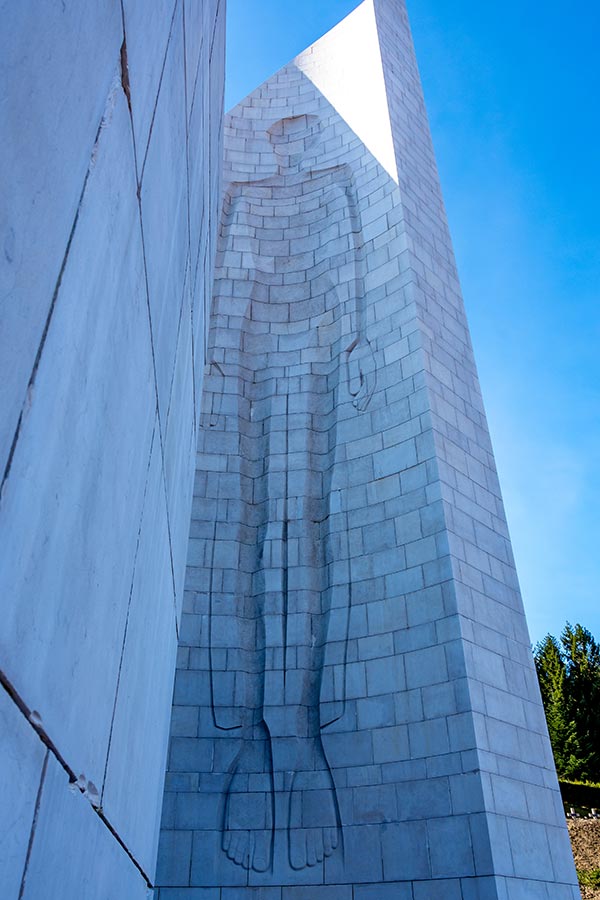
The Memorial to the Martyrs and Heroes of the Deportation, which overlooks the site, was unveiled in 1960 by the President of the Republic, General de Gaulle.
The monument, which stands over 40 metres tall, represents a stone flame, at the centre of which stands the silhouette of a deportee. At the foot of the memorial lie the remains of an unidentified deportee.
The nearby national necropolis contains 1,116 graves of deported men and women, whose bodies were exhumed from various Nazi camps and prisons.
The sandpit
Near the main road, behind the memorial, lies a secluded spot known as the sandpit. This is the place where the Gestapo had several members of the Resistance shot. In February 1943, fourteen young men from Ballersdorf and the surrounding area were executed there.
A commemorative plaque now serves as a reminder of this tragic event.
Read the case of the young men from Ballersdorf
The quarry
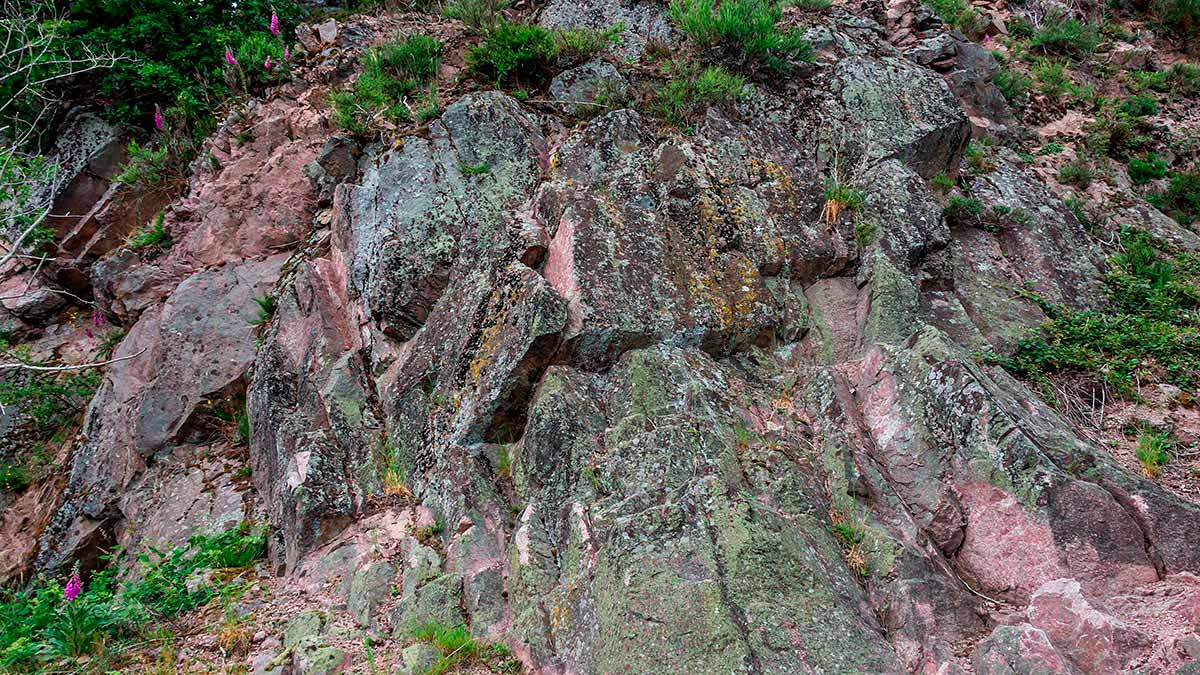
The history of the Natzweiler-Struthof concentration camp begins at the granite quarry located nearby.
In 1941, following the discovery of a workable seam, the Nazi authorities decided to set up a camp there to provide a workforce made up of concentration camp prisoners. The deportees worked there in extremely harsh conditions, first quarrying granite, then dismantling aircraft engines.
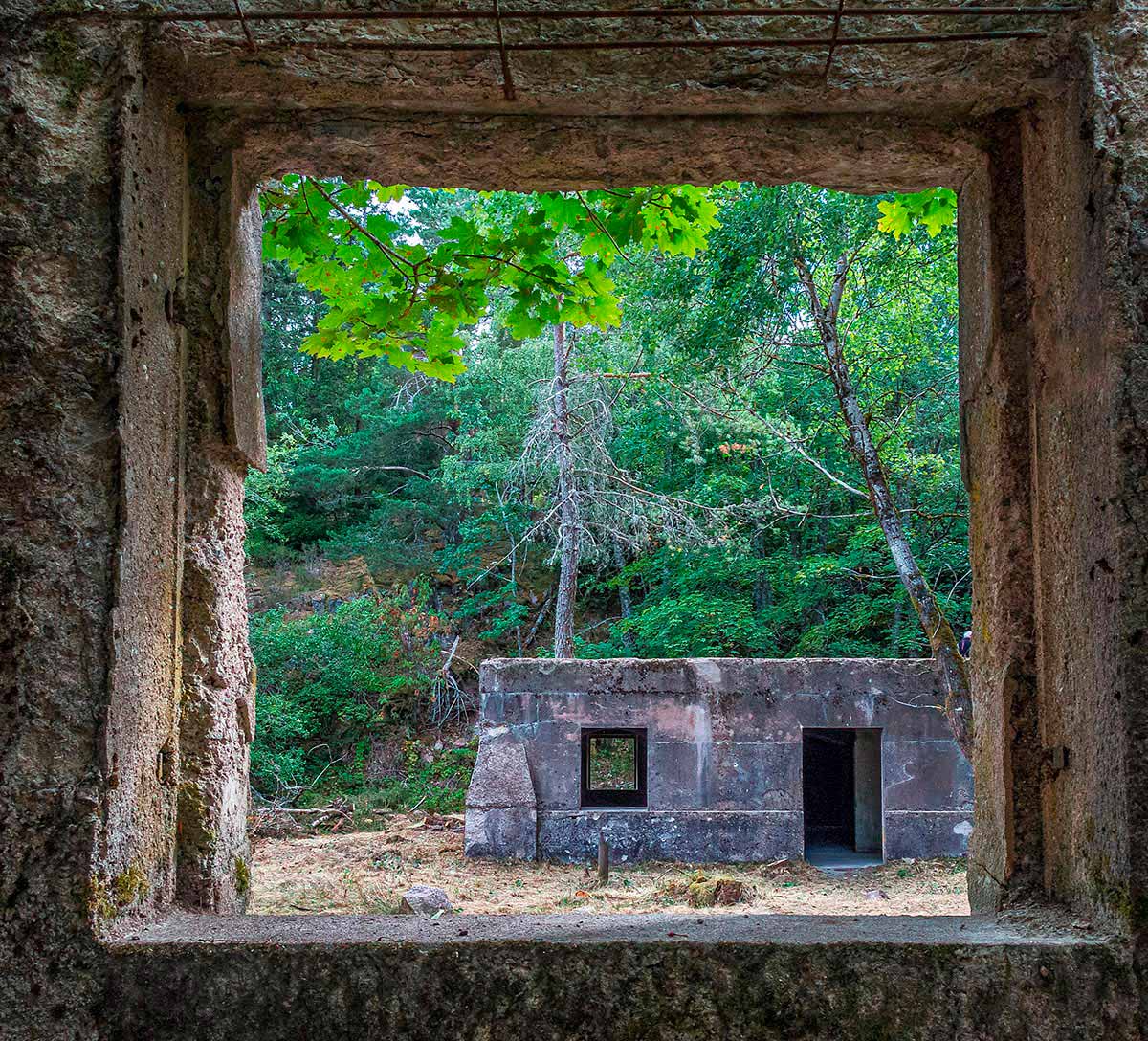
As the years have passed, this place has become largely overgrown with vegetation. Of the many original structures, only the foundations of a few buildings remain, including the old forge. Since 2025, a conservation project has been underway to build a roof on this building.
Archaeological excavations carried out between 2020 and 2024 by Archéologie Alsace have shed new light on how labour was organised in the quarry and its role in the Third Reich’s war economy.