


Resources and library
The memorial’s documentation
The memorial’s document collections feature two types of complementary resources:
Physical media
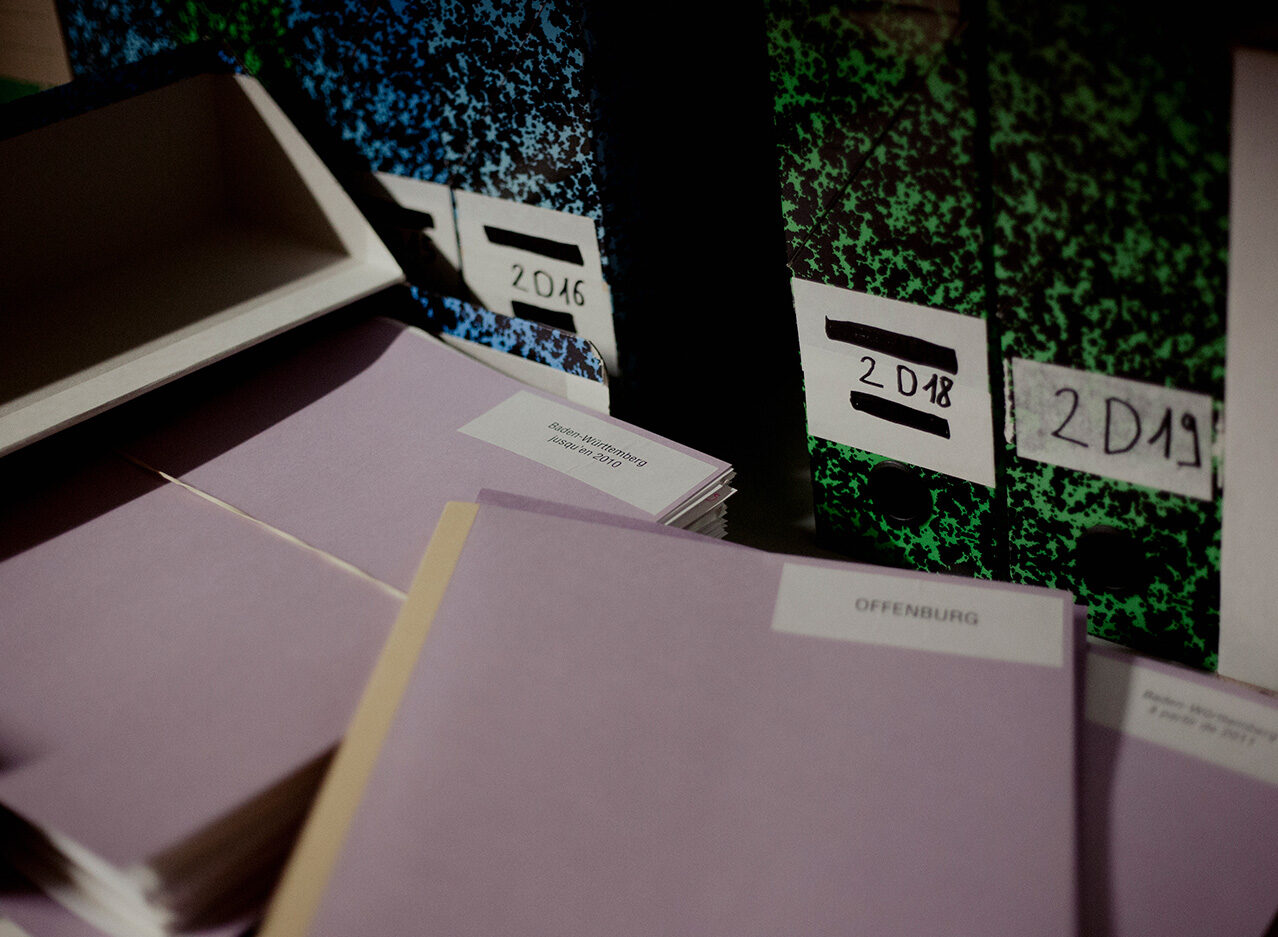
The memorial keeps historical and administrative archives, especially about how the site was managed after 1949, which take up about 58 linear metres.
A diverse collection comprising working files, periodicals, publications and reference documents, spanning approximately 15.5 linear metres.
The collection provides an essential resource for historical research, exhibitions and for the preparation of cultural outreach activities organised by guides and mediators.
Digital resources
Thematic files, individual files and digitised archive copies are also available.
These digital resources play a pivotal role in:
- fulfilling requests from researchers;
- preparing exhibitions;
- expanding and diversifying educational and cultural activities.
The library
The Memorial’s library contains over 4,000 books, periodicals and audiovisual resources.
Its collections cover, in particular:
- the history of the deportation;
- the Nazi concentration camp system;
- the Resistance;
- the Shoah (Holocaust).
These collections are an invaluable resource to:
- gain a better understanding of the history of the Natzweiler concentration camp and its subcamps;
- learn all about the stories of deportees through their testimonies published after the war;
- support the training of guides and mediators;
- prepare exhibitions and cultural education and outreach activities.

Browse the online catalogue
All our collections are accessible via our online document portal, which you can use to:
- search for books in the catalogue;
- identify available resources;
- reserve documents so that you can view them in the library