


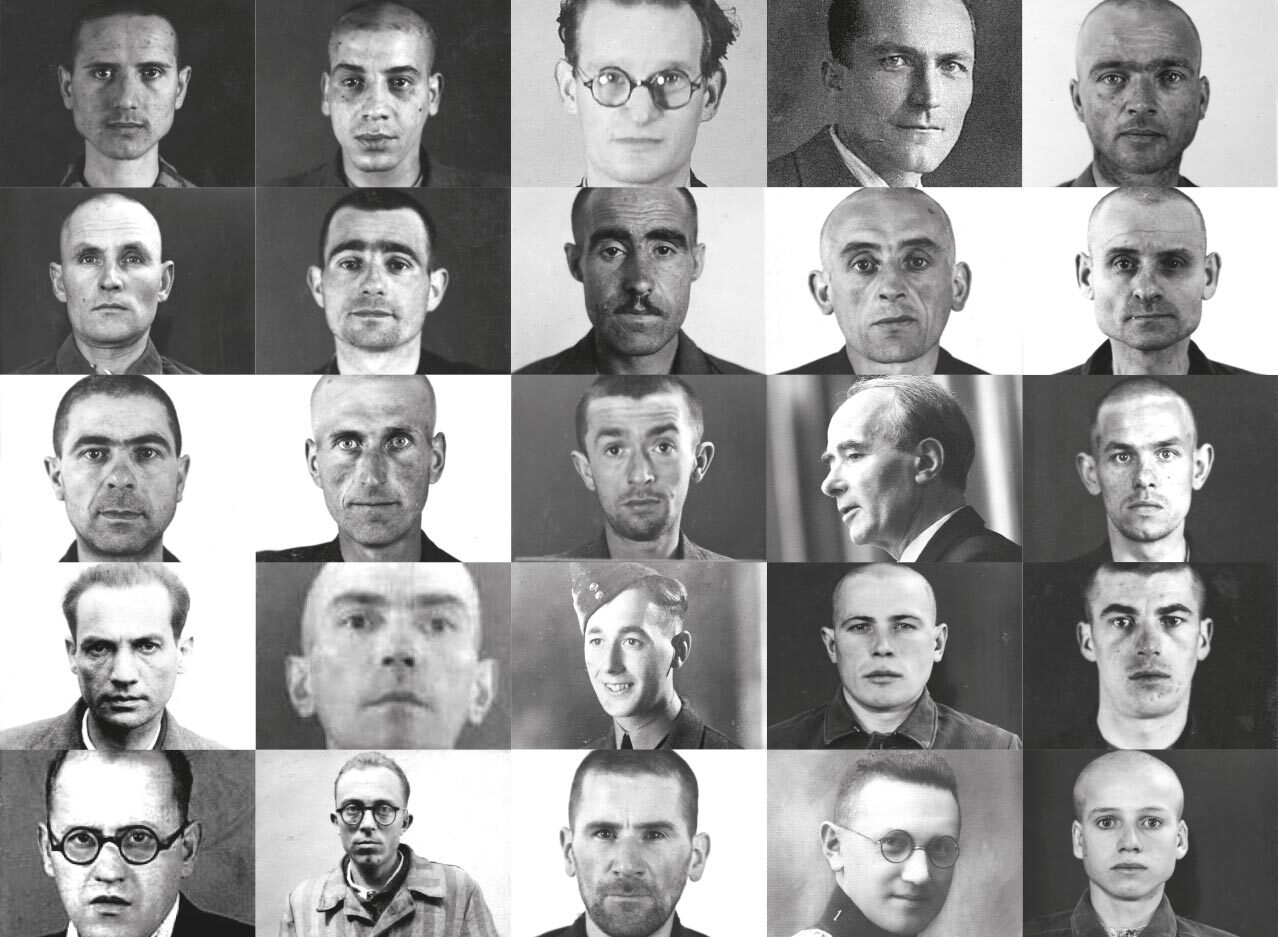
Personal biographies of deportees
B
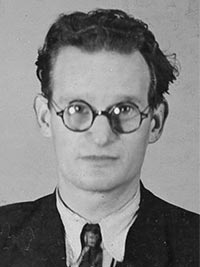
BEHNKE Willy (1914-1979)
Prisoner number 6 – Resistance member – German.
Willy Behnke was born in Stettin, Germany, on the 7th of March 1914 and worked as a baker in his hometown.
From the Resistance to deportation
As leader of the Communist Youth in Stettin, he was arrested on the 31st of January 1933 and sentenced to one year in prison. He was released in 1934 and joined the Resistance against Nazism, helping to bring together communists who had escaped repression. Using a false identity, he even managed to make contact with the regional leader of the German Communist Party, who was imprisoned in Stettin, and helped him plan his escape. However, on the 19th of September 1934, he was apprehended by the Gestapo (which literally translates as “secret state police”) along with several comrades.
In May 1935, he was sentenced to four years in prison and was held at Gollnow Prison. He was initially held in solitary confinement, then employed for eighteen months in the prison bakery. Despite having served his sentence, he was transferred to the Gestapo headquarters in Berlin and then, two weeks later, on the 10th of October 1938, Willy Behnke was registered at Sachsenhausen concentration camp (prisoner number 11085).
On the 20th of May 1941, he was placed on the first convoy bound for the new Natzweiler concentration camp, which reached its destination on the 21st of May. He was registered under prisoner number 6.
From construction to responsibility in the camp
The prisoners were confined to the outbuildings of the Struthof hostel and were there to build the concentration camp (roads, laying out terraces and constructing barracks). Willy Behnke managed to survive these gruelling working conditions and was appointed clerk in the labour department, which organised the assignment of prisoners to various work sites. He shared his “experience” with newcomers, by explaining to them how to avoid violence, conserve a little of their energy at work, and find an “easy job”. He was transferred to the Wesserling subcamp, where he continued in this role.
Upon his return to the main camp, he was appointed Lagerältester, or camp elder, in February 1944, which meant he was the head of the prisoners in the SS hierarchy. Thanks to this new position, he was able to improve living conditions by assigning less violent prisoners to Kapo positions. He was evacuated on the 4th of September 1944, registered at the Dachau concentration camp on the 6th of September, and given prisoner number 103838. In November 1944, he was forcibly transferred to the SS Dirlewanger Brigade. After being sent to a location near Budapest, he deserted in December 1944 and was held captive until November 1945.
From survivor to public figure in the GDR
He returned to work as a baker before becoming an officer in the German People’s Police from 1946 to 1951. After serving as mayor of Brandenburg an der Havel from 1954 to 1957, he went on to obtain a degree in social sciences. From 1958 to 1967, he held various positions of responsibility in the district of Suhl. From 1967 to 1971, Behnke was a member of the People’s Chamber and vice-chairman of the interparliamentary group of the GDR (former state of the German Democratic Republic, from 1949 to 1990). He was also a member of the central leadership of the Committee of Anti-Fascist Resistance Fighters of the GDR. He passed away in 1979 in Berlin. Many deportees from Natzweiler pay tribute in their testimonies to the compassionate nature of Willy Behnke, a rare prisoner in a position of responsibility who demonstrated moral courage and solidarity.
D
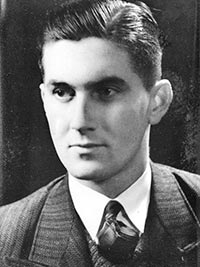
DE LOOS Dirk Albert Elisa (1917-1990)
Prisoner number 5595 – Resistance member – NN – Dutch
Dirk de Loos was born on the 13th of February 1917 in Madiun, on the island of Java, in the Dutch East Indies. He studied medicine at Leiden.
A young man engaged in the Dutch Resistance
After the Nazi invasion of the Netherlands, in October 1940 he co-founded an underground resistance newspaper called Ik zal Handhaven (“I will uphold”). From 1941 onwards, he helped Allied agents and Dutch nationals escape to England, gathered intelligence on German forces and helped carry out acts of sabotage.
Betrayed, arrested, and deported as Nacht und Nebel
After being denounced, he was arrested on the 22nd of April 1942 in Rotterdam by the Dutch police. He was detained at Oranjehotel prison, then transferred on the 6th of November 1942 to Amersfoort camp and then on the 16th of January 1943 to Vught-Herzogenbusch camp (prisoner number 1976, Block 4). Then on the 11th of March, he was moved to Haaren to be tried with about a hundred other resistance fighters. Twenty were sentenced to death and the others were classified as Nacht und Nebel. Such was the case with Dirk de Loos. He was imprisoned in Amersfoort on the 1st of October 1943, and transferred on the 25th of October 1943 to KL Natzweiler, where he was registered the following day under prisoner number 5595 (Block 11). On the 5th of September 1944, Dirk de Loos was transferred to the Dachau concentration camp, where he was registered the following day (No. 103129, Block 29).
Liberation and commitment to remembrance
He was assigned to the Ottobrünn subcamp and freed by the American army on the 29th of April 1945. Back in his home country, he completed his studies and married a former resistance member. He became one of the founding members of the Dutch friendship association of Natzweiler former prisoners. Dirk de Loos passed away on the 19th of July 1990.
L
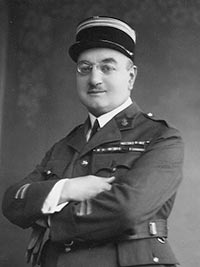
LISBONNE René Johanann Samuel (1881-1943)
Prisoner number 4505 – Resistance member – NN – French
A passionate and patriotic publisher
René Lisbonne was born in Paris on the 6th of October 1881. After completing his studies, his uncle employed him at his publishing house, F. Alcan. The young man then embarked on a brilliant career in the literary world. In 1910, he joined forces with his uncle to found the publishing house F. Alcan – R. Lisbonne. It quickly became the leading French literature collection, publishing works by Henri Bergson and Emile Duckheim, to name but a few. In 1911, he married Marthe Netter, with whom he had a son, Jean.
During the First World War, René Lisbonne commanded a company of the 5th Battalion of the 254th Infantry Regiment. In May 1916, the battalion took up position in the Cumières-le-Mort-Homme sector on the outskirts of Verdun. From the 21st to the 23rd, they were under intense bombardment. On the 23rd, the battalion commander was seriously wounded. Captain Lisbonne assumed command, but the unit was wiped out by German artillery fire. René Lisbonne was taken prisoner and spent the rest of the war in captivity at Reisen in Posen, in present-day Poland.
After the Armistice, he returned to his job as a publisher and, in the 1930s, became head of collections at the French publishing house Presses Universitaires de France. Together with Edmond Bloch, he was one of the main leaders of the Union Patriotique des Français Israélites (Patriotic Union of French Jews), founded in 1934.
A resistance fighter in the service of the France Libre (Free France) movement
At the beginning of the Second World War, he was called up again with the rank of lieutenant-colonel. After the defeat of 1940, he went back to his job, but the anti-Semitic laws of the Vichy regime soon deprived him of his employment. He then worked as head of vocational rehabilitation group no. 2.
At the end of 1942, he joined the “Marco Polo” intelligence network, based in Gironde, which worked for the Free France secret service. René Lisbonne, alias Okent Raller, was tasked with organising the clandestine gathering and transport of Belgians and Dutch nationals into Spain. On the 19th of March 1943, he was arrested in Châteauneuf-les-Bains (Puy-de-Dôme), then imprisoned in Moulins and Fresnes from the 10th of July 1943 onwards.
A life shattered at Natzweiler
On the 11th of July 1943, he was deported NN (Nacht und Nebel) to KL Natzweiler, where he was registered the following day under prisoner number 4505 (Block 13). Assigned to the terrible Kartoffelkeller–Kommando, he fell victim to the anti-Semitic persecution of SS dog handler Franz Ehrmanntraut, alias “Fernandel”. On the 28th of July 1943, René Lisbonne, aged 62, finally succumbed to the beatings and dog bites on the platform of the Kartoffelkeller.
René Lisbonne’s name is inscribed in the Panthéon as a publisher who died during the Second World War. He was awarded the distinction “Mort pour la France” (Died for France) on the 10th of February 1947. His war diary, covering the period from the 3rd of July 1914 to the 23rd of May 1916, was published in 2018 by Sipayat.
M
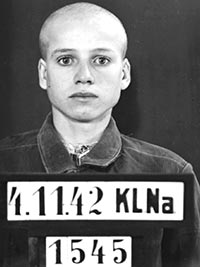
MALJUTA Iwan (1924- ?)
Prisoner number 1545 – Ostarbeiter – Ukrainian.
A native of Kapitalovka, in the Kharkiv district, Ivan Malyuta worked as a labourer in his hometown. He was rounded up in Ukraine to become an Ostarbeiter – in other words, a forced labourer from the East – and was sent to work in Strasbourg.
Deportation to the Natzweiler camp
He was arrested on the 26th of October 1942 in the capital of Alsace, accused of refusing to work (Arbeitsverweigerung). He was detained at Strasbourg Prison (cell 871) and on the 4th of November 1942 was transferred to KL Natzweiler, where he was registered under prisoner number 1575. He had just turned 18.
Transfer to Dachau and liberation
He remained at the main camp until the 21st of September 1944, when he was transferred to the Dachau concentration camp, and given prisoner number 111040 (Block 6). He was liberated by the US Army on the 29th of April 1945.
P
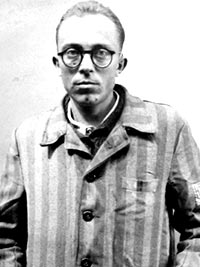
PAHOR Boris (1913-2022)
Prisoner number 8362 – Resistance Member – Writer – Slovenian
An identity caught between two cultures in Trieste
Boris Pahor was born on the 26th of August 1913 in Trieste, a city that was then part of the Austro-Hungarian Empire and became Italian after the end of the First World War; as such, he was influenced by two cultures. As a border resident of Italy, he cherished the Italian culture but still felt deeply Slavic. In 1920, he witnessed the Italian fascists burning down the Narodni Dom, the Slovenian cultural centre in Trieste. He was forced to abandon his native language, Slovenian, and make his name Italian.
Dedication to fighting fascism
As soon as he turned twenty, he joined the fight against fascism. When the Trieste region was invaded and taken over by the German army in October 1943, he joined the Yugoslav Liberation Army.
Arrest and deportation to the Nazi camps
After being arrested, he was deported by the Trieste Sipo on the 28th of February 1944 to the Dachau concentration camp, where he was given prisoner number 64542. On the 16th of March 1944, he arrived at the subcamp of Sainte-Marie-aux-Mines and became prisoner number 8362.
He was sent to the central camp on the 25th of March and treated at the Revier until the 10th of April; and then in early September 1944, he was among the large evacuation convoys bound for Dachau, where he was registered under prisoner number 103135. On the 9th of December 1944, he was placed on a transport bound for the notorious Mittelbau-Dora camp, the secret weapons camp, where he was registered on the 13th of December under prisoner number 102073.
Liberation at Bergen-Belsen
From the 20th of February 1945 to the 3rd of March 1945, he was assigned to the Harzungen subcamp. He was sent back to Dora-Mittelbau and put to work as a medic in the infirmary from the 9th of March. He was eventually transferred to Bergen-Belsen, where he was liberated by the British on the 15th of April 1945.
Writing and preserving Slovenian culture
As an advocate for Slovenian culture, he published a number of important works, including his most significant book, Pilgrim Among the Shadows. One of the world’s most distinguished literary figures, he passed away on the 30th of May 2022 in his hometown, aged 108.
PEULEVEY André (1915-2001)
S
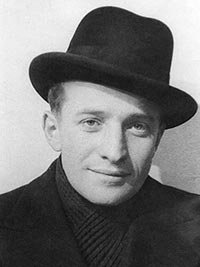
SCHEINMANN Joseph alias PEULEVEY André (1915-2001)
Prisoner number 4368 – “NN” – German national naturalised as a French citizen
A childhood marked by exile
Joseph Scheinmann was born on the 28th of January 1915 in Munich (Germany) into a Jewish family and grew up in Düsseldorf. When Hitler came to power in 1933, his family fled to France. They moved to Bruay-en-Artois (in the Nord region). They were well received and quickly settled into the local community. The young man resumed his education at a high school in Béthune.
Military service and a new identity
In 1939, he enlisted as a volunteer in the 43rd Infantry Regiment, stationed in Lille. The army gave him a French identity to protect him in case he was captured. From then on, he was known as André Peulevey, born on the 7th of November 1915 in Gucourt (Pas-de-Calais). He suffered a concussion during a bombing raid in Belgium and was subsequently repatriated to Rennes (Côtes-d’Armor) for medical treatment. After recovering, he volunteered to help the victims of the horrific bombing of Rennes railway station on the 17th of June 1940. He was taken prisoner when the Germans arrived on the 20th of June. Using a forged medical discharge certificate, he managed to avoid being transferred to a prisoner-of-war camp within the Reich and escaped on the 29th of August 1940. As he was unable to return home, Joseph Scheinmann was put to work as an interpreter at the SNCF by Louis Turban, head of the Rennes district of the SNCF. The railway worker made no secret of his contempt for the occupant. Turban hastily appointed Joseph as the SNCF’s representative to the German authorities.
Enlistment in the Resistance and intelligence networks
His new duties meant he was in regular contact with the occupant, which gave him the opportunity to gather valuable information. Joseph Scheinmann soon became part of a resistance network known as the “Bête Noire”. In November 1940, he successfully established initial contact with London and, in February 1941, he joined the MI6 network known as “La Bande à Sidonie”, which was later renamed “Georges France”. Joseph Schneinmann took on the false identity of André Le Neveu.
In the autumn of 1941, La Bête Noire and Georges France were merged into an intelligence unit known as “Georges 31” within the “Overcloud” organisation run by brothers Joël and Yves Le Tac, a structure set up jointly by the France Libre (Free France) movement and the SOE, dedicated to both intelligence gathering and subversive activities. Officially registered as Agent Q 31, alias André Martin, he had agents working in every railway station in Brittany and at key strategic locations.
Arrest, detention and death sentence
He left for London in January 1942 to undergo training in espionage techniques and parachuting, but was arrested shortly after his return to France by the Sipo on the 4th of February 1942 in Rennes. He was detained in Angers and then in Fresnes, where he spent eleven months in solitary confinement and was subjected to torture. He was sentenced to death in January 1942 by the German court on Rue Boissy-d’Anglas for his activities within “Group 31” but was not executed because the Germans were continuing their investigation into his other activities in the Resistance.
“NN” deportation to Natzweiler
Joseph Scheinmann was deported as an “NN” to Natzweiler on the 9th of July 1943, along with several other members of the “Overcloud” network: Louis Turban (who died at Natzweiler on the 20th of April 1944), the brothers Joël and Yves Le Tac, Louis Moureaux, and Louis Normand (who died at Natzweiler on the 1st of January 1944).
Joseph Scheinmann was registered at the camp under prisoner number 4368 (Blocks 13, 9 and 11) under his false identity of André Peulevey. The SS would never discover that he was Jewish. His flawless German earned him the position of interpreter. He took advantage of this minor position of responsibility as best he could, given his limited means, to alleviate the terrible treatment inflicted by the SS and kapos on the French “NN” in the July convoys.
Transfers to Dachau and liberation
Like all his fellow prisoners, he was transferred to Dachau in September 1944, where he was registered on the 6th (prisoner number 101739, Block 27). He was assigned to the Allach subcamp, where he remained until January 1945, before returning to the Dachau camp, where he was liberated by the Americans on the 29th of April 1945. On his return to France in June, he became a liquidator of rights for “Overcloud”, a position he held for several years. In 1952, he married Claire Dyment Jarrett, a linguist at the US Embassy and a former radio interpreter for the RAF. The couple moved to the United States that same year.
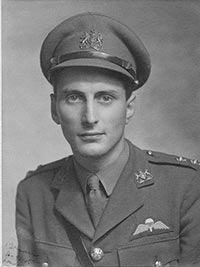
STONEHOUSE Brian (1918-1998)
Prisoner number 17649 – Resistance Member – “NN” – Artist – British.
Brian Stonehouse was born on the 8th of August 1918 in Torquay, England. His family moved to France when he was still very young. They did not go back to England until 1932. Brian studied art up until 1939, worked as an artist, and then joined the Territorial Army in the same year.
Military enlistment and recruitment by the SOE
When the Second World War broke out, he joined artillery in the British Army. He served as an interpreter in Glasgow for the French troops evacuated from Norway. Thanks to his knowledge of France, in the autumn of 1941, he was recruited as a radio operator in the French section of the Special Operations Executive (SOE). On the 1st of July 1942, Brian Stonehouse, whose codename was “Célestin”, was parachuted into occupied France, in the region of Tours. His operational codename was “Japonica”, which translates as “Japanese quince”. His radio got caught in a tree, and he spent five nights in the forest before he was able to retrieve it. At that moment, he realised that it wasn’t working. After finding refuge in Limoges, his contact directed him to Lyon. Based in Lyon, he began maintaining regular contact with London from August onwards. In September, he became a radio operator for the Newton brothers’ Greenheart network and for Henri Sevenet’s Detective network. During his resistance activities in France, Stonehouse made sketches of the people he met. He had been warned several times not to carry his sketchbooks with him when he was on a mission. Unfortunately, Brian Stonehouse was not cautious enough and used the radio too often and for too long, which allowed the Germans to pinpoint his location using their direction-finding equipment. In total, he had sent 81 messages.
Arrest and detention
He was arrested by the Vichy police on the 24th of October 1942 at the Château de Hurlevent, near Lyon. After being placed in solitary confinement in Castres and brutally interrogated by the Sipo, he was sent to Fresnes prison in December 1942. Whilst in detention, he continued to draw, at first in secret, but more openly once he had been discovered. His drawings depict his SOE agent friends in captivity, life in prison, and the guards. The Stonehouse family donated them to the collections of the Imperial War Museum in London in May 2007.
“NN” deportation to Natzweiler
In October 1943, he was deported as part of the “Night and Fog” operation to KL Mauthausen via the Neue Bremm camp. He was registered on the 16th of October 1943 at Mauthausen under prisoner number 37808. He was sent to a subcamp in Vienna to work for the Luftwaffe. In June 1944, Brian Stonehouse was transferred to Natzweiler with Albert Guérisse, alias “Pat O’Leary”. He was registered on the 23rd of June 1944 under number 17649 and was assigned to Block 13. He was marked with the Gelbpunkt, indicating that he was a dangerous individual. There, he managed to save his life by drawing pictures for the camp commander. He drew Barbel Mathias (2188). He witnessed the arrival of the four SOE women, Andrée Borrel, Vera Leigh, Diana Rowden and Sonia Olschanezky – who were assassinated on the 6th of July 1944. After the war, during the trials of Nazi war criminals, Brian Stonehouse and Albert Guérisse gave evidence regarding the treatment inflicted on these women. In 1985, Stonehouse painted a colour painting in memory of the four female resistance fighters. It is hung in the Special Forces Club in London.
Transfer to Dachau and liberation
With the Allies advancing, he was evacuated to KL Dachau, where he was registered on the 6th of September under prisoner number 103153 (Block 24). He was liberated by the Americans on the 29th of April 1945.
Liberation and international artistic career
After the war, he remained in the military and was promoted to captain whilst working for the Allied Control Council in Frankfurt am Main, where he took part in the interrogations of members of the Gestapo and the SS. From 1946 onwards, Brian Stonehouse continued his career as a fashion illustrator in the United States, creating artwork for magazines such as Vogue. In 1979, he returned to Great Britain and became a portrait painter. His clients include members of the royal family. He died on the 2nd of December 1998.
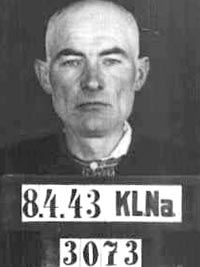
STUDER Camille (1897-1983)
Prisoner number 3073 – Jehovah’s Witness – Native of Alsace
Camille Studer was born on the 7th of November 1897 in Gueberschwihr (Haut-Rhin) and worked as a gardener. He was married and the father of a fourteen-year-old son when the war began; he lived in Guebwiller.
Refusal to perform military service: the commitment of a Jehovah’s Witness
When Alsace was annexed by the Third Reich, Camille Studer was called up to serve as an auxiliary coastguard in France, on the Atlantic coast. As he was a Jehovah’s Witness, he was not permitted to hold a weapon. He refused to show up for the call. He was arrested on the 10th of January 1943, along with his wife and his son Paul. They were all detained at Mulhouse Prison until the 23rd of January. He was transferred to the Vorbruck-Schirmeck camp on the orders of the Strasbourg Gestapo, where he was put under pressure to comply.
Deportation to Natzweiler and then Dachau
As he remained adamant in his refusal, he was sent to the Natzweiler concentration camp on the 7th of April 1943, where he was given prisoner number 3073 (Blocks 3 and 10). He was assigned as a labourer at the quarry. On the 21st of September 1944, he was transferred to the Dachau concentration camp, where he was registered the following day under prisoner number 110821 (Block 4).
He was freed by the Americans on the 29th of April 1945 and sent home on the 29th of May 1945. He was granted the status of political refugee. He died on the 20th of November 1983 in Guebwiller.
His son Paul, who was freed from Vorbruck-Schirmeck on the 5th of October 1943, was forcibly conscripted into the German army. He survived the war.
His wife Joséphine, who had been imprisoned in the Vorbruck-Schirmeck camp, was deported to the Ravensbrück camp on the 7th of April 1943. She survived and was reunited with her family in 1945.
T
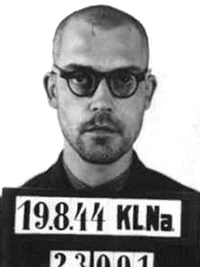
TEITGEN Paul, Pierre, Marie (1919-1991)
Prisoner number 23091 – Resistance Member – French
A family from Lorraine
Born on the 6th of February 1919 in Colombe-les-Vesoul (Haute-Saône), Paul Teitgen resided in Lunéville, at 2 bis Rue Gambetta. He was married with one child and worked as a lawyer. He came from a Christian Democratic family, several members of which were civil servants. His father, Henri, and his brother, Pierre-Henri, were also members of the Resistance and members of parliament during the Fourth Republic. He served in the artillery from the 25th of November 1939 until he was demobilised on the 15th of October 1942.
Member of the Resistance
Having been involved in the underground resistance movement within the Résistance and Témoignage Chrétien groups since March 1942, he also established a network within the national police force and set up the NAP (Noyautage des Administrations publiques) section in Nancy. He was also a member of the Lorraine regional liberation committee, which oversaw the appointment of future prefects of the Liberation. In March 1944, faced with the threat of being arrested, he left his department to lead the “Darius” network across the five departments of Brittany under the alias “Pierre Tardy”. After secretly returning to his home in Lorraine, he was arrested by the Feldgendamerie just fifteen minutes after his arrival in Lunéville on the 6th of July 1944. He was detained at Nancy Prison (Charles III) the following day, where he was interrogated eight times by the Sipo in Nancy and subjected to torture, namely through the use of electric shocks.
His deportation to Natzweiler and Dachau
He was deported to the Natzweiler concentration camp on the 19th of August 1944, where he was given prisoner number 23091 (Block 14, barrack room 1 and then 2). During the climb up the mountain between Rothau station and the camp, he was beaten with the butt of a rifle for nearly four kilometres by an SS officer who wanted his wedding ring. Paul Teitgen fell unconscious, and when he came round, he realised that the guard was in the process of stealing his ring. He then hauled Paul Teitgen to his feet with a blow from the butt of his rifle and made him run back to join the column. One morning, along with his comrades, he was led out of the Block by a Fieldwebel, wearing the cap of the mountain troops. The officer forced them to crawl through the mud for three hours. They then give the 200 men ten minutes to clean themselves up, under threat of being assigned to the quarry. On the 2nd of September 1944, he was transferred to the Dachau concentration camp, where he was registered on the 4th of September (prisoner number 98952, Block 16). He befriended other deportees (Joseph Rovan, Father Sommet and Gaston Gosselin) to protect the other prisoners from possible reprisals by the Nazis. He was liberated by the Americans on the 29th of April 1945 and repatriated on the following 31st of May on a plane carrying journalists. After the war, having successfully completed his studies at the ENA (National school of Administration), he served as sub-prefect in Lunéville.
The condemnation of torture in Algeria
On the 20th of August 1956, he became secretary of the Algiers police headquarters. During the Battle of Algiers, he condemned the use of torture and resigned on the 24th of March 1957, denouncing this institutionalised practice and the war crimes. His resignation, which had been provisionally rejected by Robert Lacoste, the Resident Minister and Governor-General of Algeria, was accepted on the 12th of September 1957. Through his research work, Paul Teitgen documented some 3,000 extrajudicial executions that took place between January and September 1957. On his return to France, he was sidelined for two years; then, after spending six months in Brazil, he became an associate councillor of the Council of State. At the same time, he became an advocate for preserving historical memory by joining the commission d’histoire de l’internement et de la déportation (Commission on the history of internment and deportation). On the 11th of June 1946, he was awarded the Legion of Honour and the War Cross; and on the 24th of October 1951, he was granted the title of deported resistance fighter. He died on the 13th of October 1991 in Saint-Cloud (Hauts-de-Seine).
W
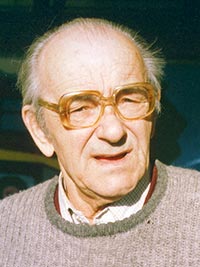
WISNIEWSKI Mieczyslaw (1925-2006)
Prisoner number 30265 – Resistance Member – Polish
The Warsaw uprising and his arrest
Mieczyslaw Wisniewski was born in Warsaw on the 17th of November 1925. In 1940, he began studying oil painting at the Academy of Fine Arts under the tutelage of Adam Rycharski and the painter Wojciech Kossak. At that time, his family lived at 21 Sienkiewicz Street. During the Warsaw Uprising in August 1944, he fought with the Secret Army in the city centre but was captured. Together with his parents, his four sisters and his older brother, he was deported to the Pruszków transit camp. Along with his older brother Tadeusz, they were transferred to the Dachau camp, where they arrived on the 12th of September 1944 (prisoner number 106011). From there, they were sent to the Mannheim–Sandhofen subcamp on the 24th of September, where they were registered on the 4th of October (prisoner number 30265). Mieczysław Wiśniewski initially worked on the production line for Daimler-Benz lorries. On learning that he was a painter, the Germans commissioned him to paint various signs for the factory and to repaint the lettering on the halls. On the 15th of December 1944, an Allied air raid bombed Sandhofen; Mieczysław and Tadeusz Wiśniewski were wounded. A few days later, Tadeusz was taken to the subcamp at Unterriexingen (near Ludwigsburg), where he died on the 25th of January 1945.
Deportation to KL Natzweiler and his liberation
Mieczyslaw Wisniewski arrived at the end of March 1945 on the last transport from Sandhofen to the Kochendorf camp, a subcamp of Natzweiler, where he worked in the salt mines on the construction and layout of the tunnels. Starting on the 29th of March, he became part of the death march to Dachau. After arriving alive at Dachau on the 8th of April, he was liberated by the Americans on the 29th of April, but he was seriously ill with typhus. During his recovery, he discovered that he had gone blind and lost his memory. His illness took him on a six-month ordeal from hospitals to sanatoriums, from the Netherlands and Belgium and then to Marseilles.
Reconstruction and artistic career in Poland
After regaining his health, he went to a displaced persons camp in Ludwigsburg. At that time, he worked in Heidelberg as a member of the American military, where, among other things, he painted cowboys on a wall. He found out that his family had survived after receiving a letter from Warsaw. He returned to Warsaw in 1946. He then worked as a graphic artist (wood engraving), linocut artist, commercial artist and poster designer. For quite some time, he worked as an illustrator for a major publishing house, while also working as an artistic painter in a variety of genres (landscapes, historical paintings, hunting scenes and still life paintings). In the 1960s and 1970s, he made a name for himself primarily as a graphic novelist (“The Adventures of Captain Zbik”, “The Underground Front” and “Captain Kloss”) and became a leading figure in Polish graphic novels.
He then went on to make a living as a painter, and his paintings were sold in Europe, America and Asia. His paintings were exhibited in the German Democratic Republic, France, Poland, Japan and the Federal Republic of Germany. He produced a series of paintings depicting his deportation and the Kochendorf death march, which were published in the book Das ist meine Straße. Bilder des Warschauer Malers aus den Konzentrationslagern Dachau, Mannheim-Sandhofen und Kochendorf 1944/45, Mannheim 2012.
He died in 2006.